
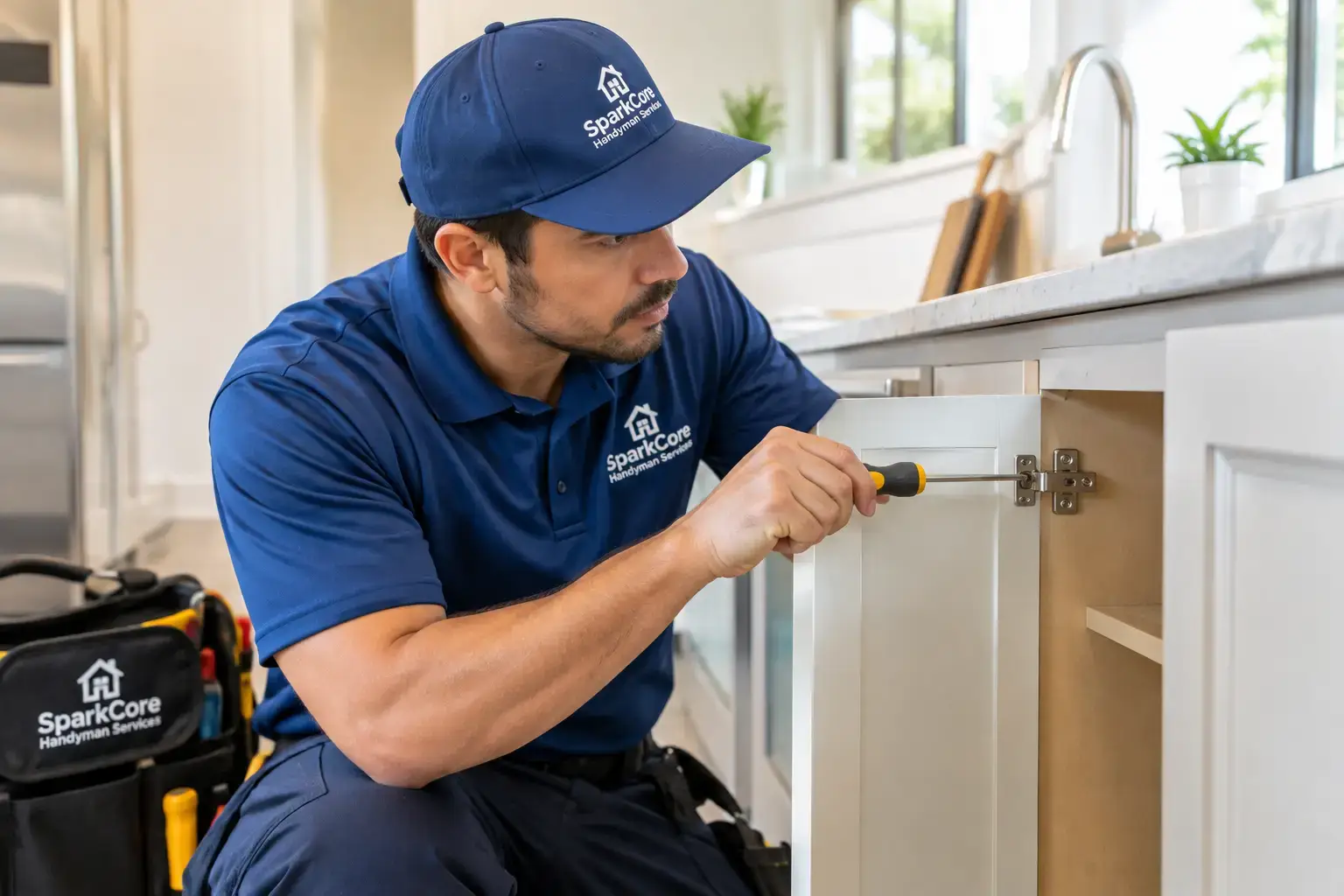


A cabinet door that rubs the frame, hangs lower on one side, or will not close cleanly is more than a small annoyance. Cabinet doors sagging can chip paint, strain hinges, wear out screw holes, and make an otherwise clean kitchen or bathroom look neglected. The good news is that many sagging doors can be corrected without replacing the entire cabinet.
The right repair depends on what is actually moving. A loose hinge needs a different fix than a warped door, a damaged cabinet box, or a cabinet that was installed out of level. Taking a few minutes to identify the cause helps prevent the familiar cycle of adjusting a hinge, seeing the door sag again next week, and starting over.
Why Cabinet Doors Start Sagging
Most cabinet doors sag because the hinge screws have gradually loosened. Opening and closing a door thousands of times creates small movements at the hinge. In particleboard or MDF cabinet boxes, those movements can enlarge the screw holes until the screws no longer hold firmly. Heavy solid-wood doors, doors with glass panels, and doors that are frequently slammed tend to show the problem sooner.
Humidity can also play a role. In kitchens and bathrooms, moisture changes can cause wood doors to expand, contract, or twist slightly. A door that was perfectly aligned during a dry period may begin rubbing after a humid stretch. Water leaks beneath a sink or near a dishwasher can be more serious, especially if the cabinet material has swollen around a hinge mounting point.
Sometimes the hinge is not the real problem. The cabinet itself may have shifted, the mounting screws may have loosened from the wall, or the cabinet box may be out of square. This is more common with older cabinets, lower-quality installations, and cabinets carrying a lot of weight. Before making several adjustments, look at the door and cabinet as a complete unit.
How to Tell What Needs Repair
Start by opening the door and gently lifting the outer edge. If the door moves upward noticeably at the hinge side, the hinges or their screws are likely loose. Check each hinge closely. A missing screw, bent hinge arm, cracked mounting plate, or screw that spins without tightening is a clear sign of the issue.
Next, close the door slowly and look at the reveal, which is the gap around the door. If the gap is narrow at the top and wider at the bottom, the door has dropped. If it rubs only along one side, it may need a side-to-side adjustment. If the door sits crooked even when the hinges appear tight, place a straightedge along the cabinet frame and inspect for a bowed door or a cabinet box that has shifted.
For double doors, do not assume both doors are at fault. One sagging door can make the center gap look uneven and cause the other door to appear misaligned. Adjust or repair the clearly loose door first, then reassess the pair.
A Simple Hinge Adjustment May Be Enough
Many modern cabinets use concealed European-style hinges. These typically have adjustment screws that move the door up and down, side to side, and closer to or farther from the cabinet box. Small changes make a big difference, so turn one screw a quarter-turn at a time and check the door after each adjustment.
For a door that has dropped, loosen the screws holding the hinge mounting plate to the cabinet box just enough to move the plate. Support the door with one hand, raise it to the desired position, and retighten the screws. It is often easier with a helper, especially for a tall pantry door or a heavy wood cabinet door.
Older surface-mounted hinges usually offer less adjustment. In that case, tightening screws or repositioning the hinge may be necessary. Avoid overtightening. A screw that strips the cabinet material will create a larger repair than the original alignment issue.
When Loose Screw Holes Are the Problem
If a hinge screw turns but never gets tight, the hole has likely become enlarged. This is especially common in particleboard cabinets. Simply using a longer or larger screw can sometimes help, but it is not always the best answer. A screw that is too long can poke through the cabinet side, and a larger screw can split thin material.
For solid wood, a practical repair may involve filling the enlarged hole with wood glue and hardwood toothpicks or a properly sized wood plug. Once the filler has cured, a new pilot hole can be drilled and the screw reinstalled. This gives the screw fresh material to grip.
Particleboard requires a more careful approach. Depending on the extent of the damage, a hinge repair plate may reinforce the area and provide a stable new mounting surface. If moisture has caused the material to swell or crumble, the repair may need reinforcement beyond a simple filler. This is a situation where a handyman can save time and avoid making a damaged cabinet side worse.
Check for Water Damage Before Fixing the Door
A sagging cabinet door under the kitchen or bathroom sink deserves a closer look. Inspect the cabinet floor, side panels, and hinge area for swollen edges, soft material, peeling laminate, staining, or a musty smell. Even a slow leak can weaken the cabinet material enough that hinge screws will not stay secure.
Fixing the alignment without addressing moisture is only temporary. Once the area is dry and the source of the leak has been handled, the cabinet may be repairable with reinforcement or replacement hardware. If the side panel has deteriorated significantly, replacing that section or the cabinet may be more cost-effective than repeated hinge repairs.
Door and Cabinet Problems That Need More Than Adjustment
Not every crooked door can be corrected with a screwdriver. A warped wood door may need to be replaced if it has twisted enough that it will not sit flat. A cracked hinge, worn soft-close mechanism, or bent mounting plate should be replaced rather than forced back into position.
The same applies when the entire cabinet is moving. If wall cabinets pull away from the wall, base cabinets shift, or multiple doors suddenly become misaligned, the issue may be with the cabinet installation rather than the doors. A professional should inspect the mounting points, fasteners, and cabinet box condition before making cosmetic adjustments.
For rental owners, property managers, and Realtors preparing a property, cabinet alignment is worth addressing early. Doors that hang unevenly can make a kitchen look older than it is, even when the cabinets are otherwise in good condition. A targeted adjustment and hardware repair is usually faster and less disruptive than a cabinet replacement project.
How to Prevent Cabinet Doors From Sagging Again
Once the doors are aligned, a little routine attention helps keep them that way. Wipe up water near sinks and dishwashers promptly, especially around cabinet seams. Do not hang heavy bags, towels, or organizers from cabinet door handles, since the added leverage puts stress on hinges.
Every few months, look over high-use doors and tighten screws that have started to loosen. Use a hand screwdriver for final tightening whenever possible. Power drivers are useful, but they can strip screws quickly in particleboard cabinet boxes.
If your cabinets have soft-close hinges, make sure the door is not being forced shut against an overfilled shelf or drawer. Repeated pressure can knock a door out of alignment and wear the hinge mechanism faster.
When to Call a Handyman for Sagging Cabinet Doors
Call for help when screws will not hold, the cabinet material is damaged, several doors need to be aligned, or the cabinet box itself appears loose or water-damaged. These repairs are often straightforward for an experienced professional, but they require the right hardware, careful adjustment, and a clean finish.
For homeowners and property managers in Los Angeles, SparkCore Handyman Services can inspect the cause, repair loose hinge mounting points, replace worn hardware, and get cabinet doors closing evenly again. Clear pricing and dependable scheduling matter when a small repair is holding up a move-in, listing, or everyday kitchen use.
A properly aligned cabinet door should close without scraping, sit evenly beside the surrounding doors, and stay that way after regular use. If yours keeps dropping, do not keep tightening the same screw and hoping for a different result. Repair the holding point, correct the alignment, and the cabinet can look right again without turning a minor problem into a larger project.