
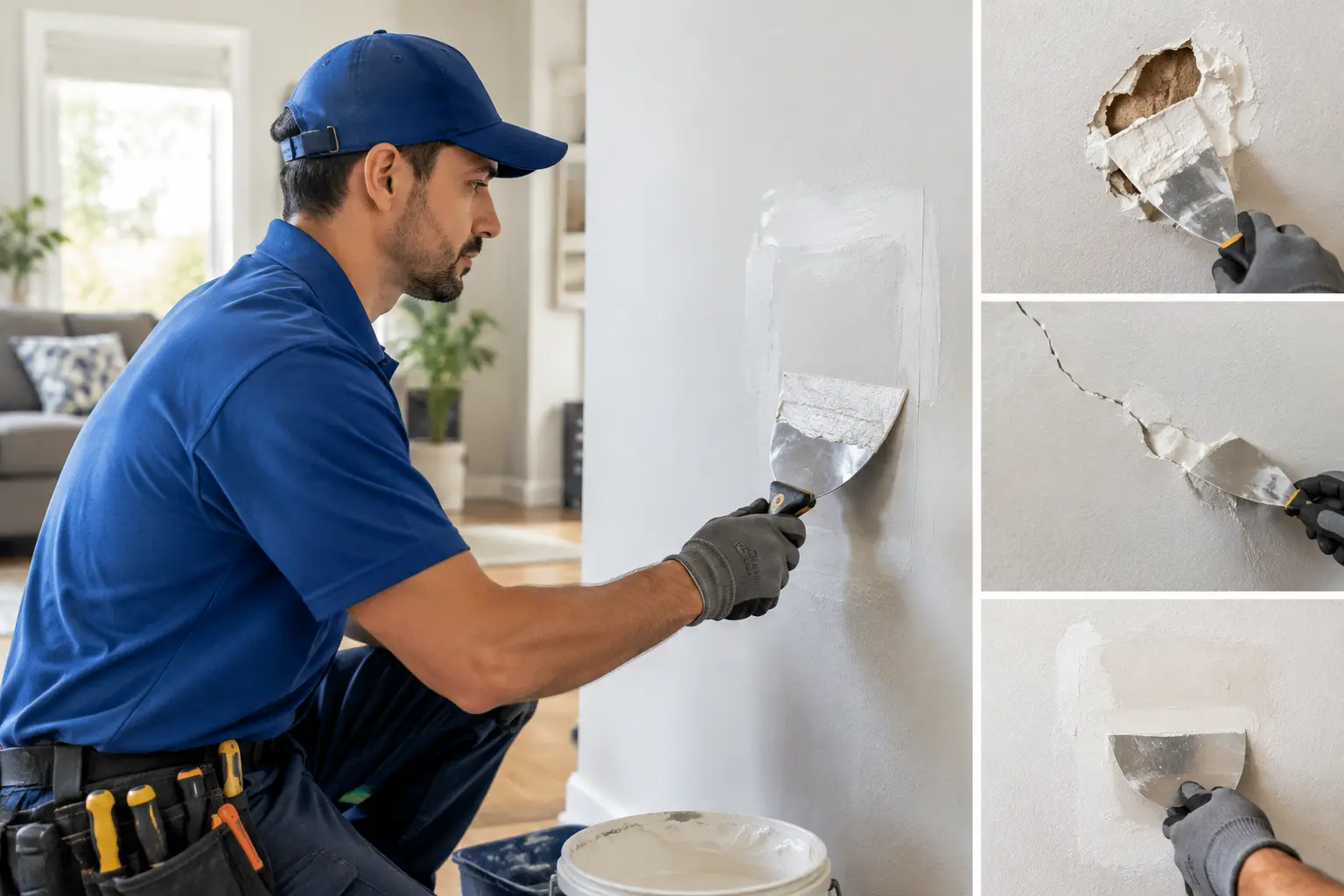


A small wall blemish can look minor until fresh paint makes it stand out even more. These drywall patch repair examples show what a proper repair should look like at each level of damage, from a picture-hanger hole to a larger opening that needs backing, tape, and texture matching.
For homeowners, landlords, and property managers, the goal is rarely just to fill a hole. The repaired area needs to sit flat, blend with the surrounding wall, hold up over time, and accept paint without flashing or showing a visible patch in afternoon light. That is where the right method matters.
Drywall Patch Repair Examples by Damage Type
Nail holes and pinholes
Nail holes from artwork, curtain rods, or old wall decor are the simplest drywall repair. A clean repair uses lightweight spackle or joint compound pressed into the hole, allowed to dry, sanded smooth, and touched up with matching paint.
The common mistake is applying too much compound in one pass. A large blob may cover the hole at first, but it leaves a raised spot that becomes obvious after painting. Two thin applications are usually cleaner than one thick one. If several small holes sit close together, it often makes sense to skim the whole small area rather than create a row of separate dots.
This is a reasonable DIY job when you have matching paint and the wall has a smooth finish. On textured walls, the touch-up is more noticeable unless the texture is recreated before paint.
Small dents, chips, and doorknob marks
A shallow dent from moving furniture or a chip near a doorway usually does not require cutting out drywall. Loose paper and damaged material should be removed first. The area is then filled in thin layers, feathered beyond the damaged spot, sanded, primed if needed, and painted.
Doorknob damage deserves a little more attention. If a door regularly strikes the wall, patching the dent without adding a doorstop means the problem will return. A good repair addresses both the wall damage and the reason it happened.
For small chips with torn drywall face paper, sealing the exposed paper before applying compound can prevent bubbling. That extra step is easy to skip, but it helps create a smoother finish.
Holes the size of a golf ball or a fist
This is where many quick fixes start to fail. A hole larger than a couple of inches needs support behind the repair material. Depending on its size and location, the repair may use a self-adhesive mesh patch, a drywall patch secured with backing strips, or a purpose-cut piece of drywall.
A mesh patch can work well for a small, clean hole in otherwise sound drywall. It is fast and often practical for rental turnover work. The trade-off is that the compound needs to be feathered wider than most people expect. If the edges are not blended over a broad area, the outline can show through after paint.
For a fist-sized hole, installing a solid drywall piece is often the better long-term choice. Wood backing or drywall clips hold the new piece in place, tape reinforces the seams, and several thin coats of joint compound level the surface. This approach takes longer, but it creates a repair that is less likely to crack or telegraph through the paint.
Larger openings from plumbing, electrical, or access work
A rectangular hole cut to reach a pipe, wiring, or a damaged section of wall should usually be repaired with a new piece of drywall, not a large amount of patch compound. The opening is squared up, backing is installed where needed, and a fitted drywall piece is fastened securely.
The seams then need drywall tape and multiple coats of joint compound. Paper tape is often preferred for flat seams because it creates a strong, thin joint when embedded correctly. Mesh tape can be useful in some situations, particularly for repairs that need a setting-type compound, but it is not automatically the best answer for every wall.
This type of repair becomes more involved when the cutout lands near a corner, a window, a baseboard, or a textured feature wall. It may also reveal why the wall was opened in the first place. Before closing it up, confirm that any leak, electrical issue, or pest entry has actually been resolved.
Water-damaged drywall patches
Water stains, soft drywall, or bubbling paint call for diagnosis before repair. Cosmetic patching will not last if moisture is still entering from a roof leak, plumbing line, shower surround, window, or exterior wall.
After the source is fixed and the area is completely dry, damaged drywall should be removed back to solid material. Insulation behind the wall may also need inspection or replacement. A new drywall section can then be installed, taped, finished, primed with a stain-blocking primer, and painted.
In Los Angeles homes, water damage can come from more than dramatic leaks. Slow plumbing leaks under upstairs bathrooms, aging window seals, or air-conditioning condensation can leave a small but persistent stain. If drywall feels soft, smells musty, or keeps discoloring after repainting, treat it as a moisture issue first, not a paint issue.
What Makes a Patch Look Invisible?
The actual hole repair is only part of the job. Most visible patches fail at the finishing stage. Joint compound shrinks as it dries, so professionals build up thin coats and feather each one farther past the previous edge. This gradual transition prevents a raised ring around the repair.
Sanding matters, but over-sanding is a problem too. Aggressive sanding can expose tape, damage the drywall paper, or create a dip that becomes visible once the wall is painted. The goal is a flat transition, checked from the side with a work light, not simply a surface that feels smooth to the hand.
Texture is often the deciding factor. Smooth drywall is straightforward compared with orange peel, knockdown, skip trowel, or heavily hand-textured walls. Texture needs to match both the pattern and the surrounding density. A patch can be perfectly flat yet still stand out if its texture is too heavy, too light, or sprayed in a different direction.
Paint is the final test. Even with the original paint color, a small touch-up can flash because older paint has faded, walls collect dust, and different sheens reflect light differently. For the least noticeable result, painting from corner to corner on the repaired wall is sometimes worth the added effort, especially in hallways, living rooms, and rooms with strong natural light.
When a DIY Patch Is Enough and When to Call for Help
A homeowner can often handle a few nail holes, a tiny dent, or a small chip in a low-visibility area. The materials are inexpensive, and the job is forgiving if the wall is smooth and there is extra matching paint.
Calling a handyman is usually the smarter move when the hole is larger than a few inches, the drywall is cracked or soft, a leak may be involved, the wall has a difficult texture, or the repair is in a highly visible room. It also helps when you need the work done promptly before a move-out inspection, listing photos, guests, or a tenant turnover.
A dependable repair should include clear prep, protection for nearby floors and furniture, dust control, honest communication about paint matching, and enough drying time between coats. Same-day completion may be possible for simple patches, while larger holes and textured walls can require return visits because compound, primer, and paint need time to dry properly.
SparkCore Handyman Services handles practical drywall repairs with that full finish in mind, not just a fast fill. For a repair that will be painted and seen every day, it is worth choosing the method that fits the damage instead of the quickest-looking shortcut.
Before scheduling any drywall patch, take a clear photo in natural light and include a wider shot of the wall. It helps identify the size of the damage, nearby trim or outlets, and the wall texture so the repair can be planned correctly from the start.