
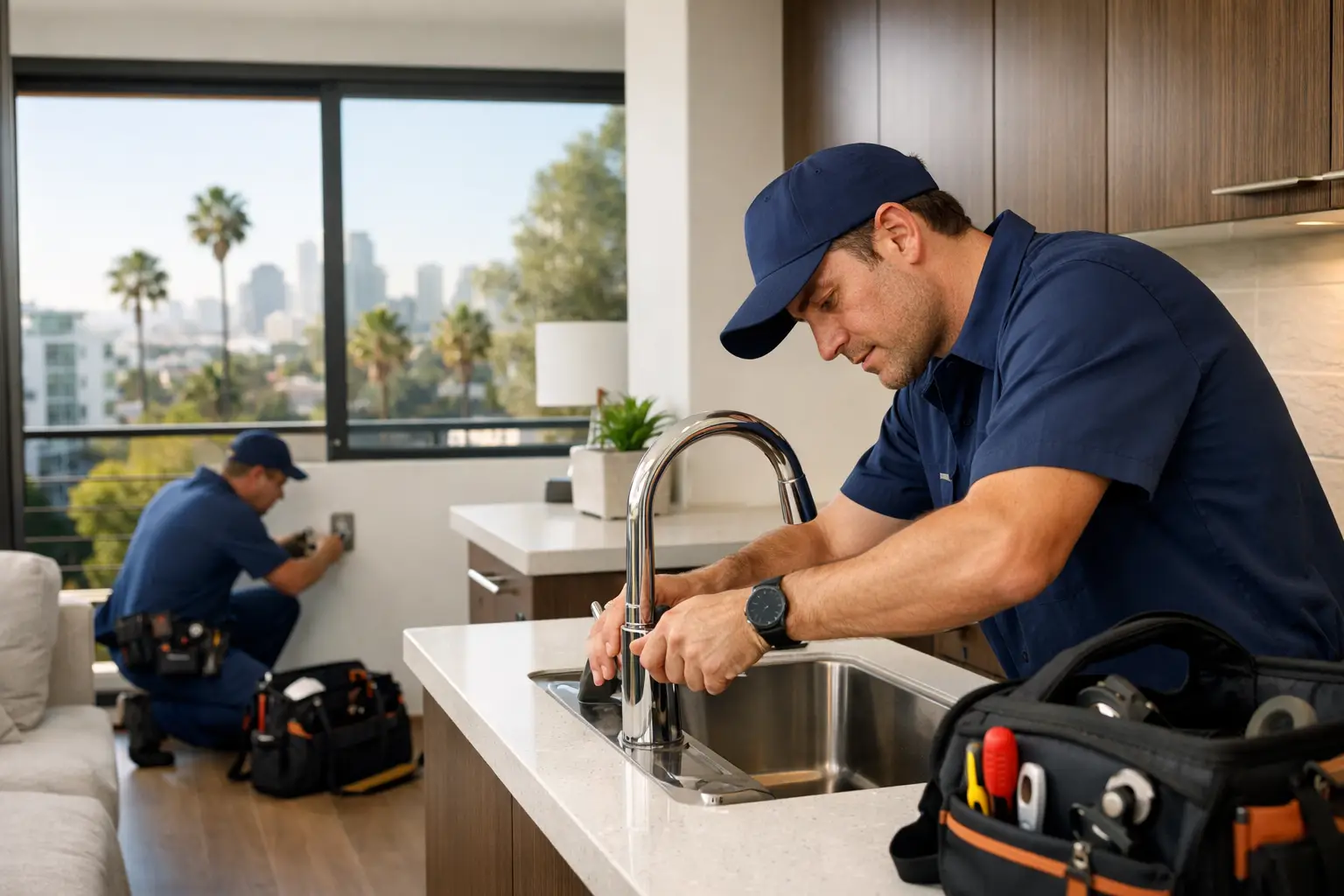


A leaking ceiling at 10 p.m., an outlet that suddenly stops working, or a toilet that will not flush can turn a normal week into a stressful one fast. This Los Angeles apartment repair guide helps tenants, owners, and property managers handle common problems calmly, document the right details, and understand when a repair cannot wait.
Apartment repairs are not all handled the same way. A loose cabinet knob is usually a maintenance request. Water near an electrical outlet, a gas smell, or a major active leak is a safety issue. Knowing the difference protects the property, helps prevent disputes, and gives the person making the repair a clearer picture of what is needed.
Start With Safety, Not the Repair
Before taking photos or trying a quick fix, make sure the area is safe. If water is actively flowing, move belongings out of the way and place towels or a bucket beneath the leak if it is safe to do so. Do not touch wet outlets, light switches, or electrical equipment.
Call emergency services or the utility provider immediately when there is a suspected gas leak, fire, sparking electrical equipment, or another immediate threat to life and safety. If the apartment has a burst pipe or severe leak, notify the landlord, property manager, or emergency maintenance contact right away. In a multi-unit building, even a small leak can travel through ceilings and walls and damage another residence.
Treat these situations as urgent:
- A smell of gas, a hissing gas line, or suspected carbon monoxide exposure
- Smoke, sparks, repeated breaker trips, or water around electrical components
- A burst pipe, ceiling leak, sewage backup, or flooding that cannot be contained
- A broken exterior door lock, shattered window, or another condition that leaves the home unsecured
For a non-emergency, avoid taking apart plumbing, electrical fixtures, or appliances unless you are qualified and have permission to do the work. A well-meant repair can cause more damage or create a question about who is responsible for the cost.
Document the Problem Clearly
A strong repair request is specific, dated, and easy to understand. Take clear photos and short videos before moving items or cleaning up, especially if there is water damage. Capture the source of the issue when possible, along with the affected area. For example, photograph the pipe beneath a sink and the water-stained cabinet floor, not just one or the other.
Write down when you first noticed the problem, whether it is getting worse, and what you have already done. Include useful details: is the leak constant or only when the upstairs neighbor uses water? Does the outlet fail all the time or only when a particular appliance is plugged in? Is the heater not working in every room or only one?
Send repair requests in writing whenever possible, even if you also call or text. Keep copies of messages, photos, and maintenance responses. This gives everyone a shared record and reduces confusion if the repair requires follow-up.
What to Include in a Maintenance Request
Keep the message direct. State the apartment address and unit number, describe the problem, explain how it affects daily living or safety, and note whether someone can provide access. If there is active damage, say so plainly. “The kitchen sink cabinet is filling with water and the leak is continuing” gets a faster, clearer response than “sink issue.”
For property managers, good documentation also helps determine whether the work is a routine repair, a vendor call, or a larger building issue. It can reveal patterns, such as recurring drain backups or a failing water heater, before they become more expensive problems.
Who Is Responsible for Apartment Repairs?
Responsibility depends on the lease, the cause of the damage, and the type of property. In general, owners and landlords are responsible for maintaining habitable conditions and repairing building systems they control. This often includes plumbing inside walls, electrical systems, heat, structural issues, roofs, common areas, and provided appliances, subject to the lease and circumstances.
Tenants are typically expected to keep the unit reasonably clean, report damage promptly, and avoid causing damage through neglect or misuse. A clogged drain caused by ordinary buildup may be handled differently from a drain blocked by inappropriate items. A broken blind from normal wear is different from one damaged by a pet or an accident.
Do not assume responsibility based on a verbal conversation alone. Review the lease, report the issue, and ask for written clarification when there is uncertainty. California rental rules can be fact-specific, and deadlines or remedies may depend on the condition involved. If a serious habitability issue is not addressed, tenants may want to contact a qualified tenant-rights organization or attorney before withholding rent, arranging major work, or deducting repair costs.
Common Los Angeles Apartment Repairs and What They Mean
Los Angeles apartments range from older duplexes with aging plumbing to newer buildings with smart thermostats and complex access systems. The symptom may be simple, but the cause is not always obvious.
A slow drain can result from hair and soap buildup, but repeated backups can point to a deeper branch-line or sewer problem. A handyman can often handle minor fixture adjustments and accessible clogs, while recurring drainage issues may require a licensed plumber and building-level investigation.
Peeling paint, cracked caulk, loose cabinet doors, damaged screens, and sticking interior doors are usually straightforward maintenance items. They still deserve attention. Small gaps around a tub or shower, for example, can let water reach drywall and framing over time.
A running toilet may look minor, but it can waste a surprising amount of water. A toilet that rocks, leaks at the base, or backs up is more urgent because it can damage flooring or create sanitation concerns. Similarly, a flickering light may be a loose bulb, but frequent flickering, heat at a switch plate, or breaker trips should be assessed by a qualified electrician.
Heating and air conditioning concerns also require context. Check basic items first, such as thermostat settings, batteries, filters that tenants are allowed to replace, and tripped breakers. If the system still fails, report the issue rather than forcing equipment to run. Older equipment can be damaged by repeated resets or blocked airflow.
When to Call a Professional Instead of Trying a DIY Fix
Simple tasks such as tightening a visible screw, replacing a permitted light bulb, or resetting a tripped breaker once may be reasonable. Anything involving hidden water, electrical wiring, gas, major appliances, roof leaks, mold-like growth, or structural damage is not a casual weekend project.
Owners and property managers should also consider the cost of repeat repairs. Hiring the cheapest available person for a quick patch can be more expensive if the work fails, damages a finish, or leaves the original cause unresolved. Clear scope, dependable scheduling, and proof of insurance matter, especially when work is happening inside an occupied unit.
For small repair lists, turnover work, drywall patches, fixture replacement, painting touch-ups, and practical maintenance, SparkCore Handyman Services provides insured, owner-led help for Los Angeles-area property owners who want clear pricing and reliable communication. Larger electrical, plumbing, or construction work may require the appropriate licensed trade professional instead.
A Practical Repair Plan for Property Managers
Fast repair handling does not mean rushing without a process. First, confirm whether the issue is an emergency and give the occupant basic safety instructions. Then collect photos, the unit number, entry availability, and a short description of what changed or failed.
Next, match the job to the right professional. A loose door closer and wall patch are not the same type of call as a main-line backup or a suspected electrical fault. Set a realistic appointment window, communicate it clearly, and update the resident if anything changes. Missed appointments and vague answers are often what turn an ordinary repair into an avoidable complaint.
After the work is complete, confirm what was repaired, whether any drying time or follow-up is needed, and who should be contacted if the issue returns. This is especially helpful after water damage, paint repairs, caulking, or appliance troubleshooting.
Los Angeles Apartment Repair Guide: Prevent Problems Before They Grow
Most expensive apartment repairs start as small, ignored signals. Report dripping faucets, soft drywall, persistent condensation, loose toilets, slow drains, and peeling caulk early. Tenants should not wait until move-out to mention damage, and owners should not postpone minor maintenance until it becomes a vacancy-ready project.
A few habits make a real difference: keep sink strainers clear, use bathroom exhaust fans where available, avoid pouring grease down drains, replace approved HVAC filters on schedule, and let management know when water stains or unusual odors appear. These are not glamorous tasks, but they protect finishes, plumbing, and indoor comfort.
When something breaks, a clear report and the right repair professional can save time, money, and frustration. The goal is not to fix every problem yourself. It is to respond early, protect the home, and make sure the repair is handled properly the first time.