
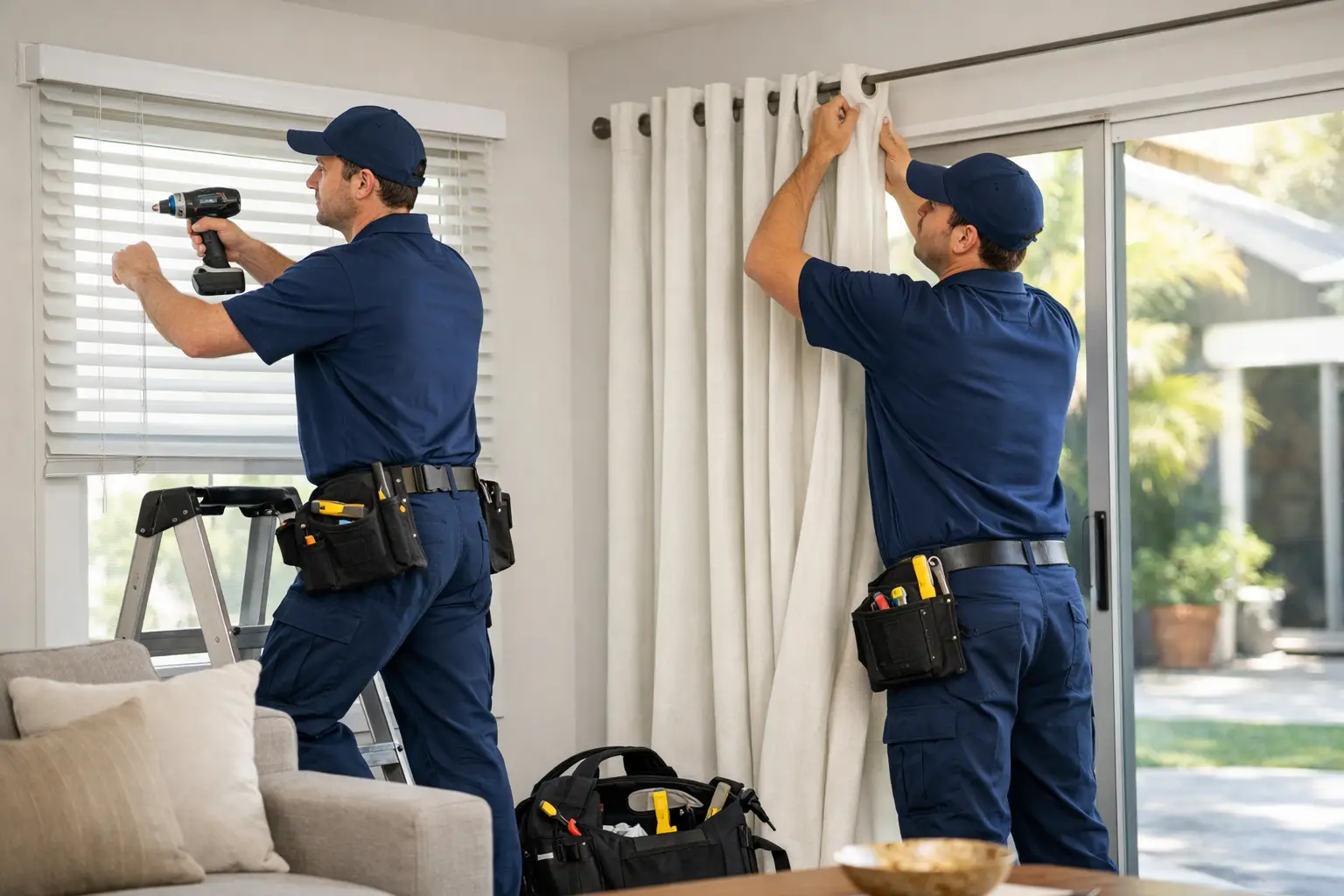


A new set of window treatments can make a room feel finished in an afternoon, but only when the hardware is level, the fabric hangs correctly, and every bracket is anchored where it belongs. Blinds and curtain installation looks simple until a rod pulls loose from drywall, blinds scrape the sill, or one window sits noticeably higher than the next. Careful measuring and secure mounting make the difference between a quick visual upgrade and a job that holds up.
For Los Angeles homeowners, renters preparing a space with owner approval, property managers, and Realtors getting a listing ready, professional installation saves time and avoids unnecessary wall repairs. The goal is not just to put something over a window. It is to create dependable privacy, useful light control, and a clean, intentional look.
Start With the Right Mounting Style
The first decision is whether the blinds or curtain rod will be mounted inside the window frame or outside of it. This affects the look, coverage, measurements, and type of hardware needed.
An inside mount fits within the window opening. It is common for blinds, shades, and shutters because it keeps the trim visible and gives the window a tailored appearance. The frame must be deep enough for the product, and the opening should be measured in several places. Older homes can have windows that are not perfectly square, even when they look that way from across the room.
An outside mount attaches above or around the window frame. It is often the better choice when the frame is shallow, the window opening is uneven, or you want more coverage. Curtains mounted several inches above the trim can make a standard-height room feel taller. Extending the rod beyond both sides of the window also lets the panels clear more glass when open, which brings in more daylight.
There is no one correct choice. A blackout shade in a bedroom may need an outside mount to reduce light gaps, while a slim roller shade in a kitchen may look best inside the frame. The right approach depends on how the room is used and what you want the treatment to do.
Measure Before Ordering Anything
Most installation problems begin before the installer arrives. Hardware can be mounted securely and still look wrong if the blinds are too narrow or curtain panels are too short.
For inside-mounted blinds, measure the width at the top, middle, and bottom of the opening, then use the narrowest measurement unless the manufacturer gives different instructions. Measure the height on the left, center, and right as well. Do not assume a window is uniform, especially in older properties or after remodeling work.
For outside-mounted blinds or shades, decide how much overlap you want past the window opening. More overlap generally improves privacy and light control. For curtains, rod placement matters as much as panel size. A rod installed high and wide can improve proportions, but it also needs enough space above the trim and to the sides of the window.
Curtain length deserves special attention. Panels can just touch the floor for a clean, practical finish, break slightly at the floor for a softer look, or puddle on the floor for a more formal style. In most active households and rental properties, panels that lightly touch the floor are easiest to maintain. They do not collect as much dust or interfere with cleaning.
Before ordering, check for anything that may interfere with placement: crown molding, air vents, sprinkler heads, window cranks, security sensors, nearby cabinetry, or sliding doors. A good installer plans around these details rather than forcing standard placement where it does not fit.
Blinds and Curtain Installation Requires Secure Anchoring
Window treatment hardware may look lightweight, but the mounting points carry more load than people expect. This is especially true with long rods, lined drapes, blackout curtains, or motorized shades.
Whenever possible, brackets should be fastened into wall studs or solid wood framing. Stud-mounted hardware is the most reliable option for heavier curtains and wide spans. When studs are not in the needed location, the correct drywall anchors can provide support, but they must match the wall type and expected weight. Basic plastic anchors are not the right answer for every job.
Plaster walls, tile, concrete, metal studs, and drywall each require different fastening methods. Los Angeles homes can vary widely from one neighborhood and building era to the next, so it is worth identifying the wall material before drilling. A hole placed in the wrong location is easy to make and frustrating to hide.
Long curtain rods often need a center support bracket. Skipping it can cause the rod to bow over time, even if the side brackets initially feel solid. Wide blinds may also use multiple brackets, and each one needs to be aligned precisely so the headrail locks in evenly.
Leveling matters just as much as anchoring. A rod that is off by even a small amount can be obvious once full-length panels are hanging. Installers should mark the bracket positions, confirm the height with a level, and check the visual balance against the window trim before final tightening.
Choose Treatments That Work for the Room
Appearance matters, but the best blinds or curtains also solve a practical problem. Before selecting materials, consider privacy, sun exposure, heat, cleaning needs, and how often the window must be opened.
Bedrooms and nurseries
Blackout curtains or blackout roller shades are useful when early morning light is a problem. Keep in mind that many blackout products block light through the fabric but still allow some light around the edges. An outside mount with sufficient overlap usually provides better results. Layering blinds with curtains can add both darkness and a finished look.
Living rooms and shared spaces
Light-filtering shades, woven shades, and curtains with sheer panels can soften direct sunlight without making the room feel closed off. In rooms with strong afternoon sun, consider materials that help reduce glare and protect floors and furnishings from fading.
Kitchens and bathrooms
Moisture and easy cleaning should guide the choice. Faux wood blinds, vinyl blinds, and certain roller shades are often more practical than heavy fabric. Curtains near a sink or stove may collect grease or moisture, so shorter, washable options are usually easier to live with.
Sliding doors and large windows
Vertical blinds, panel track systems, or curtains on a properly supported rod can work well. The key is making sure the treatment opens in the direction people actually use the door. A beautiful setup becomes inconvenient if it blocks the handle, drags across the floor, or must be moved every time someone steps outside.
Small Details Create a Finished Look
Once the hardware is mounted, the finishing steps separate a neat installation from a rushed one. Curtain panels should be steamed or allowed to hang long enough for packaging creases to relax. Rings, hooks, and grommets should be spaced evenly so the fabric folds consistently.
For blinds, test the lift, tilt, and locking functions several times. The bottom rail should sit level, cords should operate smoothly, and the treatment should not catch on handles or trim. Cord safety devices should be installed where required and especially in homes with young children or pets.
If several windows are visible in the same room, align their rods and treatments based on a consistent visual line whenever possible. Window openings may not be identical, but matching rod heights can make the entire wall feel more organized. This is one reason measuring each opening individually matters.
It is also smart to keep spare brackets, screws, and manufacturer instructions after the project is complete. If a panel needs laundering or a blind needs adjustment later, having the original parts on hand avoids guesswork.
When It Makes Sense to Hire Help
A simple cordless blind on a small, accessible window may be a straightforward DIY project. Installation becomes more complicated when walls are hard to anchor, windows are high up, rods are extra long, or several treatments need to line up across a room. Motorized systems, heavy drapery, and tall stairwell windows also call for extra care.
Hiring a dependable handyman can be especially useful when the project includes more than window coverings. Maybe the room also needs touch-up paint after old hardware is removed, a loose window trim repair, furniture assembly, or mounting a nearby TV. Handling related small projects in one visit can save scheduling time and help the room come together faster.
At SparkCore Handyman Services, the focus is on clear communication, careful measurements, secure mounting, and leaving the work area clean. Homeowners should know what will be installed, where it will be placed, and what the job will cost before work begins.
Well-installed blinds and curtains do more than cover a window. They help a bedroom rest easier, make a bright living room more comfortable, and give a property the cared-for finish people notice as soon as they walk in.