
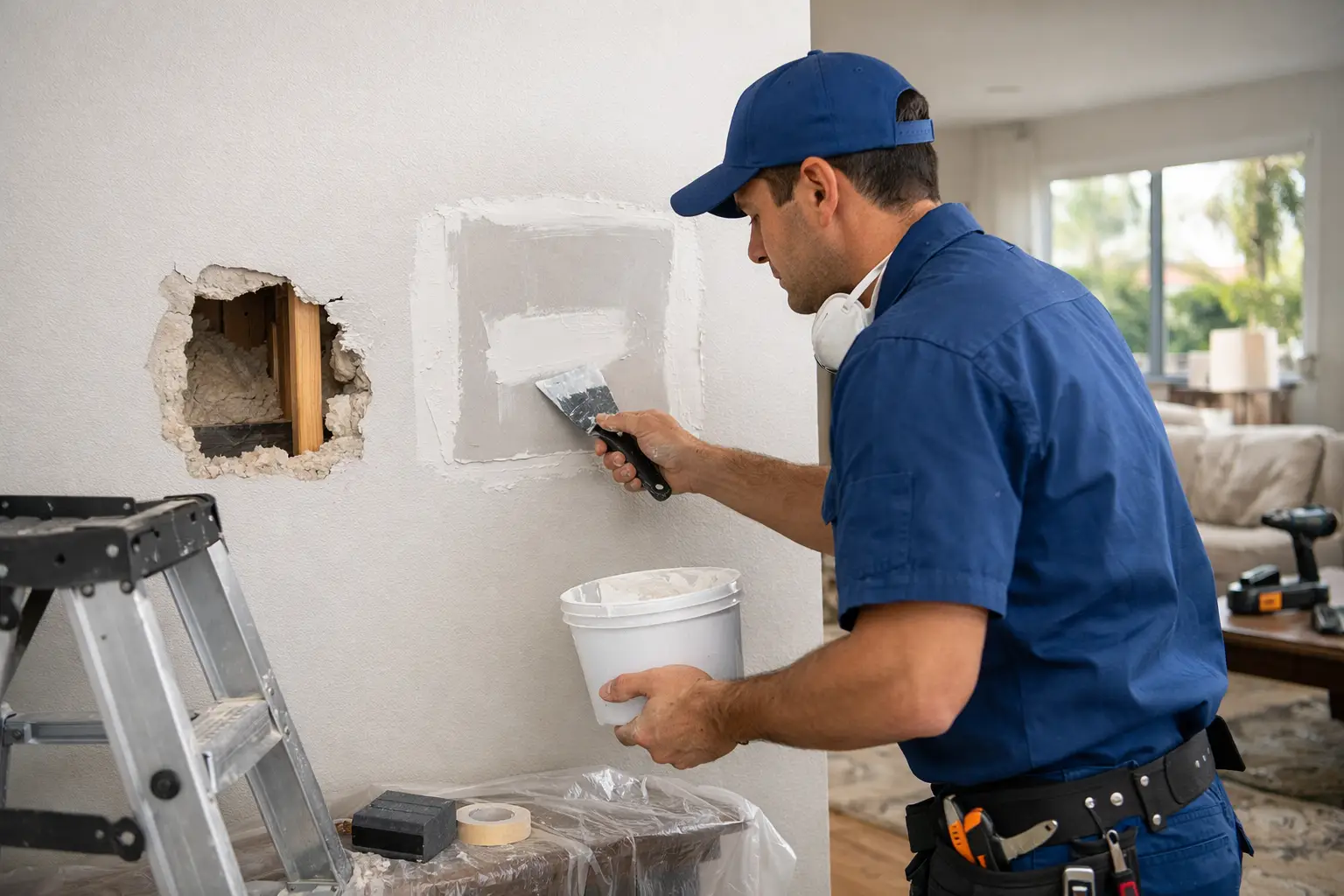


A doorknob hole, an old TV mount, or a water stain can make a perfectly good room feel unfinished. So, how long does drywall repair take? For many small repairs, the hands-on work takes just a few hours. The full timeline, however, often depends on drying time between coats of joint compound, primer, and paint.
The good news is that most wall damage does not turn into a week-long project. A skilled handyman can often complete minor repairs in one visit, while larger holes or water-damaged areas may need two or more visits for a smooth, paint-ready finish. The difference is not just the size of the hole. It is the condition behind the drywall and the number of layers needed to make the repair disappear.
How Long Does Drywall Repair Take for Common Damage?
A nail pop, small dent, or nail hole is usually the fastest repair. These minor issues can often be filled, sanded, primed, and touched up in one to two hours when fast-setting compound and matching paint are available. The wall may be usable right away, but fresh paint still needs time to dry before furniture is moved back against it.
A small hole, such as damage from a door handle or an anchor, commonly takes two to four hours of active work. Depending on the patch method and the finish required, it may need a second coat of compound after the first coat dries. If the goal is a clean result that blends with the surrounding wall, rushing that drying step usually shows later as a visible edge, dip, or cracked patch.
For a medium hole, roughly the size of a fist to a dinner plate, expect a half-day of labor spread across one or two days. The damaged section may need to be cut into a clean square, reinforced with backing, patched with new drywall, taped, and coated with compound. Each coat has to dry before sanding and applying the next one.
Large holes, damaged corners, or a section of wall that needs replacement may take one to three days. That timeline includes installing new drywall, taping seams, applying multiple coats, sanding, priming, and painting. A repair can take longer if the wall has a heavy texture, specialty finish, or difficult-to-match paint.
The Drying Time Is Usually What Extends the Job
Homeowners often see a handyman patch a hole in an hour and wonder why the job cannot be painted immediately. The answer is moisture. Traditional joint compound needs time to dry through, not just feel dry on the surface. If it is sanded or painted too soon, the patch can shrink, crack, or show through the finish.
A typical drywall repair needs two or three thin coats of compound. Under favorable indoor conditions, each coat may dry in several hours or overnight. In Los Angeles, dry weather can help, but a cool coastal home, limited ventilation, a bathroom, or a recently cleaned room can slow the process. Thick coats also take much longer than thin, properly applied coats.
Fast-setting compound can shorten the wait and is useful for certain small repairs. It does not eliminate every delay, though. The repair still needs careful sanding, primer, and paint. For a visible wall in a living room, entryway, or hallway, taking the extra time for a smooth surface is usually worth it.
A Typical Drywall Repair Timeline
For a straightforward small patch, the first visit may include protecting the floor, removing loose material, installing a patch if needed, taping, and applying the first coat of compound. Once that coat is dry, the next step is a second coat to feather the repair beyond the patch edges. After final sanding, primer helps prevent the repaired area from absorbing paint differently than the rest of the wall.
If the repair is minor and the existing paint is on hand, the work may be finished the same day. More often, a quality repair follows a simple two-day rhythm: repair and first coats on day one, then final sanding, priming, and painting on day two. Larger repairs can require another day for additional drying and finish work.
Painting can add time even after the wall is repaired. A small touch-up may take less than an hour, but it only blends when the paint color, sheen, and application match the surrounding wall. If the original paint has faded from sunlight or the exact color is unknown, painting the full wall may produce a much better result. That adds labor, but it avoids the obvious square or glossy spot that can appear after a touch-up.
What Can Make a Drywall Repair Take Longer?
The visible damage is only one part of the estimate. A dependable repair starts with checking what caused it. If a wall keeps cracking because of movement, if a door is repeatedly striking the same spot, or if there is moisture behind the drywall, patching the surface alone is not a lasting fix.
Water damage is the biggest reason timelines change. Before drywall is replaced, the source of the leak must be stopped and the area needs to be dry. Repairing a ceiling stain beneath an active plumbing leak or roof leak only guarantees that the stain will return. Wet insulation, mold concerns, sagging material, and damaged framing can all turn a simple patch into a more involved repair.
Texture is another factor. Smooth walls are easier to blend than orange peel, knockdown, or hand-applied textures. Matching texture takes patience and sometimes a test application before the final coat. High ceilings, stairwells, tight furniture layouts, and walls with baseboards or trim damage can also add setup and finishing time.
When Same-Day Drywall Repair Makes Sense
Same-day service is realistic for cosmetic damage that is dry, stable, and limited in size. Think small dents, picture-hanging holes, nail pops, loose tape in a small area, or a minor door-handle puncture. If you have leftover paint from the wall, that can make same-day completion more likely.
For rental turnovers, listing photos, or an upcoming move, it helps to send clear photos of the damage before scheduling. Include a wider photo of the wall and a close-up with something for scale. That allows the handyman to arrive with the right patch material, compound, tools, and realistic expectations about whether a follow-up visit will be needed.
SparkCore Handyman Services helps Los Angeles homeowners and property managers handle drywall repairs with clear scheduling and straightforward communication. For a small repair, the goal is not to overcomplicate the job. For larger damage, the goal is to explain the steps and allow enough drying time to do it right.
How to Keep the Repair Moving
You can make the visit more efficient by clearing furniture and wall decor away from the damaged area. If possible, save any matching paint, even if the can is nearly empty. Knowing the paint brand, color, and sheen can prevent unnecessary guesswork.
Avoid pressing on soft drywall, cutting into a stained ceiling before the leak is addressed, or applying household spackle over damp material. These quick fixes can make the final repair more difficult. If the damage is near an outlet, switch, plumbing line, or ceiling fixture, leave the opening work to a qualified professional who can check the area safely.
The most realistic answer to how long does drywall repair take is this: small, dry cosmetic repairs can be done in hours, while repairs requiring multiple coats, texture matching, or water-damage investigation take longer because the finish needs time to cure. A well-timed repair is one that looks like the wall was never damaged, not one that simply gets covered up quickly.