
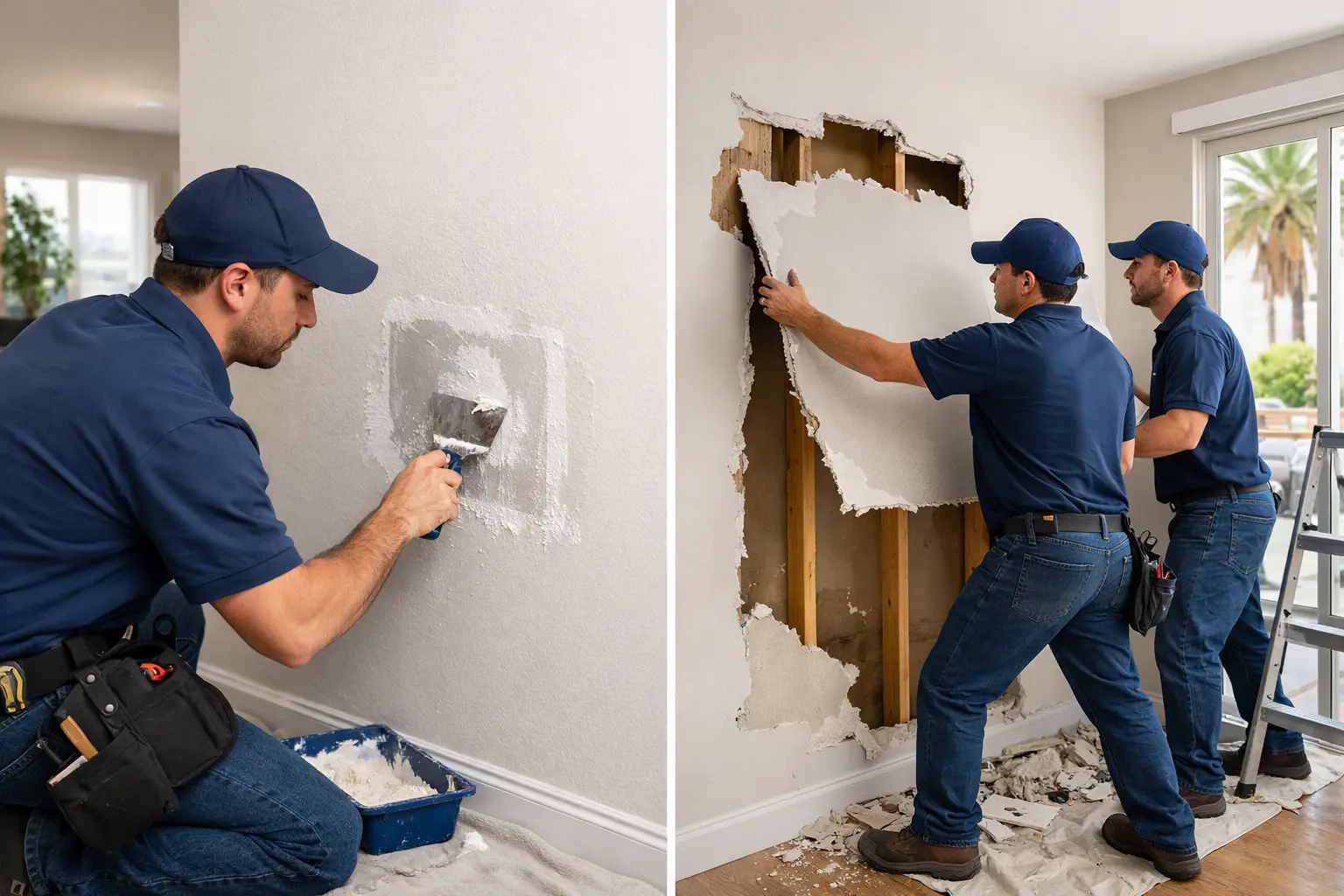


A fist-sized hole behind a bedroom door, a ceiling stain after a leak, or a crack that keeps returning can make a simple question feel less simple: drywall repair versus replacement. The right answer is rarely based on appearance alone. It depends on what caused the damage, how far it extends, whether moisture is still present, and whether the wall can be restored to a smooth, durable finish.
For most homeowners, a professional repair is the faster and more cost-effective option. But patching the wrong problem can leave you with visible seams, recurring cracks, hidden mold, or a wall that fails again after the next plumbing leak. Here is how to make a practical call before work begins.
Start With the Cause of the Damage
Drywall is a finish material, not a structural one. It can crack, dent, stain, and soften for many reasons, including impacts, settling, humidity, plumbing leaks, roof leaks, and poorly installed fasteners. Before deciding whether to patch or replace it, identify the cause.
A doorknob hole caused by one hard impact is usually a straightforward repair. A brown ceiling stain may be repairable too, but only after the roof, pipe, or upstairs bathroom leak has been fixed and the area has dried completely. Covering water-damaged drywall before solving the source only delays a larger repair.
Recurring cracks deserve a closer look. Hairline cracks near doors, windows, and ceiling corners are common in homes that experience minor settling or seasonal movement. A properly prepared repair may hold well. Wider cracks, cracks that grow quickly, or cracks paired with sticking doors or uneven floors may point to framing movement or another issue worth investigating first.
When Drywall Repair Is the Better Choice
Repair makes sense when the damage is contained and the surrounding drywall remains firm, dry, and securely attached. A skilled patch can blend into the wall so well that it disappears after texture and paint are matched.
Small holes, dents, and surface damage
Nail holes, anchor holes, dents, scuffs, and small holes are classic repair jobs. The damaged section is filled or patched, then sanded, primed, and painted. For holes larger than a few inches, a proper repair usually involves cutting back to sound drywall and installing a supported patch rather than relying on a quick mesh patch alone.
This approach works especially well for move-out touch-ups, rental turnovers, wall damage from furniture, and the everyday wear that builds up in busy homes.
Localized cracks and popped fasteners
A visible screw or nail head that has pushed through the paint is called a fastener pop. It can often be corrected by securing the drywall to the framing again, setting the fastener below the surface, and refinishing the area. Isolated seam cracks can also be repaired by removing loose material, applying joint compound correctly, and reinforcing the seam where needed.
The key word is isolated. If fastener pops or seam cracks appear across a large wall or ceiling, the issue may be broader than a cosmetic patch.
Small, fully dried water stains
A small stain from a repaired leak does not automatically require replacement. If the drywall is dry, solid, free of odor, and not swollen or soft, it may be possible to seal the stain with the right primer and repaint. If there is any softness, sagging, peeling paper, or mold growth, the affected section should be removed instead.
When Drywall Replacement Is the Safer Investment
Replacement is not always a full-room project. Often, it means removing one damaged section and installing new drywall from a clean, stable edge. This gives the repair a sound base and prevents compromised material from staying inside the wall.
Moisture damage, mold, or crumbling drywall
Wet drywall can lose its strength quickly. Once the gypsum core softens or the paper facing separates, drying it out does not return it to its original condition. If drywall is swollen, soft to the touch, sagging, moldy, or crumbling, replacement is usually the responsible option.
This is particularly true around bathrooms, kitchens, laundry areas, and ceilings below plumbing. The leak must be repaired first. Then the damaged material can be removed, the cavity checked for additional moisture concerns, and new drywall installed and finished.
Large areas of damage
A wall with several old patches, widespread dents, multiple large holes, or damaged texture may cost more to repair piece by piece than to replace a larger section. The same applies when a renovation requires moving outlets, opening a wall for plumbing or electrical work, or correcting an uneven section.
Replacing a wider area creates fewer patch edges and can produce a cleaner final finish. It also gives the installer a chance to add backing, inspect framing, or correct issues behind the wall before closing it up.
Repeated repairs that never blend in
Some walls have been patched so many times that the surface becomes uneven, wavy, or difficult to paint. Heavy texture can make this worse because matching it is more involved than a smooth-wall repair. At that point, replacement or resurfacing may deliver a better result than adding another layer of compound over old work.
Drywall Repair Versus Replacement: Cost Factors
The lowest upfront price is not always the best value. A small repair generally costs less because it uses less material and takes less time. However, the final cost is shaped by more than the size of the hole.
Accessibility matters. Ceiling repairs, stairwell walls, high areas, and spaces behind built-ins take more preparation and labor. Texture matching also affects price. A smooth wall is typically easier to blend than orange peel, knockdown, skip trowel, or a custom hand-applied texture.
Painting is another factor people often overlook. A repair can be finished beautifully, but old paint may have faded enough that a spot-painted area still shows. In some cases, painting the full wall from corner to corner is the best way to make the repair disappear. If water damage is involved, proper stain-blocking primer is necessary before the finish coat.
Replacement costs more when it requires demolition, debris removal, new drywall, taping, multiple finishing coats, texture, and paint. Yet when damaged material covers a substantial area, replacement can avoid the ongoing expense and frustration of repeated patching.
What a Proper Drywall Repair Should Include
A quality drywall repair is more than filling a hole and applying paint. The damaged area needs to be cut back to stable material, supported where necessary, patched with the correct thickness of drywall, taped, and finished in thin layers. Each layer needs appropriate drying time before sanding and applying the next one.
Rushing this process can cause joint lines, flashing under paint, cracking, or a patch that sits proud of the wall. Good prep also protects nearby floors, furniture, and trim from dust. For occupied homes, that attention matters as much as the final appearance.
Ceilings require extra care. Because light often hits ceilings at an angle, even a minor uneven area can stand out. A repair that looks acceptable before paint may become obvious after a glossy or poorly matched finish is applied.
Los Angeles Homes Have a Few Extra Variables
In Los Angeles, drywall damage can be influenced by older construction, minor settling, dry conditions, and occasional water intrusion from aging roofs or plumbing. Small movement cracks are common, especially at wall-to-ceiling transitions and around openings. They are often repairable, but a repair should account for movement rather than simply burying the crack under compound.
For condos and apartments, it is also smart to confirm whether a leak came from your unit, a shared plumbing line, or the unit above. Documenting the source and allowing the area to dry before closing the wall can help avoid disputes and repeat damage.
Make the Decision Before the Patch Goes On
A quick visual inspection can tell you a lot. Press gently around the damaged area. If the drywall feels firm and dry, the damage is limited, and the cause is resolved, repair is likely the sensible route. If it feels soft, smells musty, shows spreading discoloration, or keeps cracking in the same place, plan for a more thorough assessment and possible replacement.
At SparkCore Handyman Services, the goal is not to sell a bigger job than your wall needs. It is to give homeowners a clear scope, explain what is behind the recommendation, and complete the work with a clean, durable finish. A good drywall fix should leave you with one less thing to notice every time you walk into the room.