
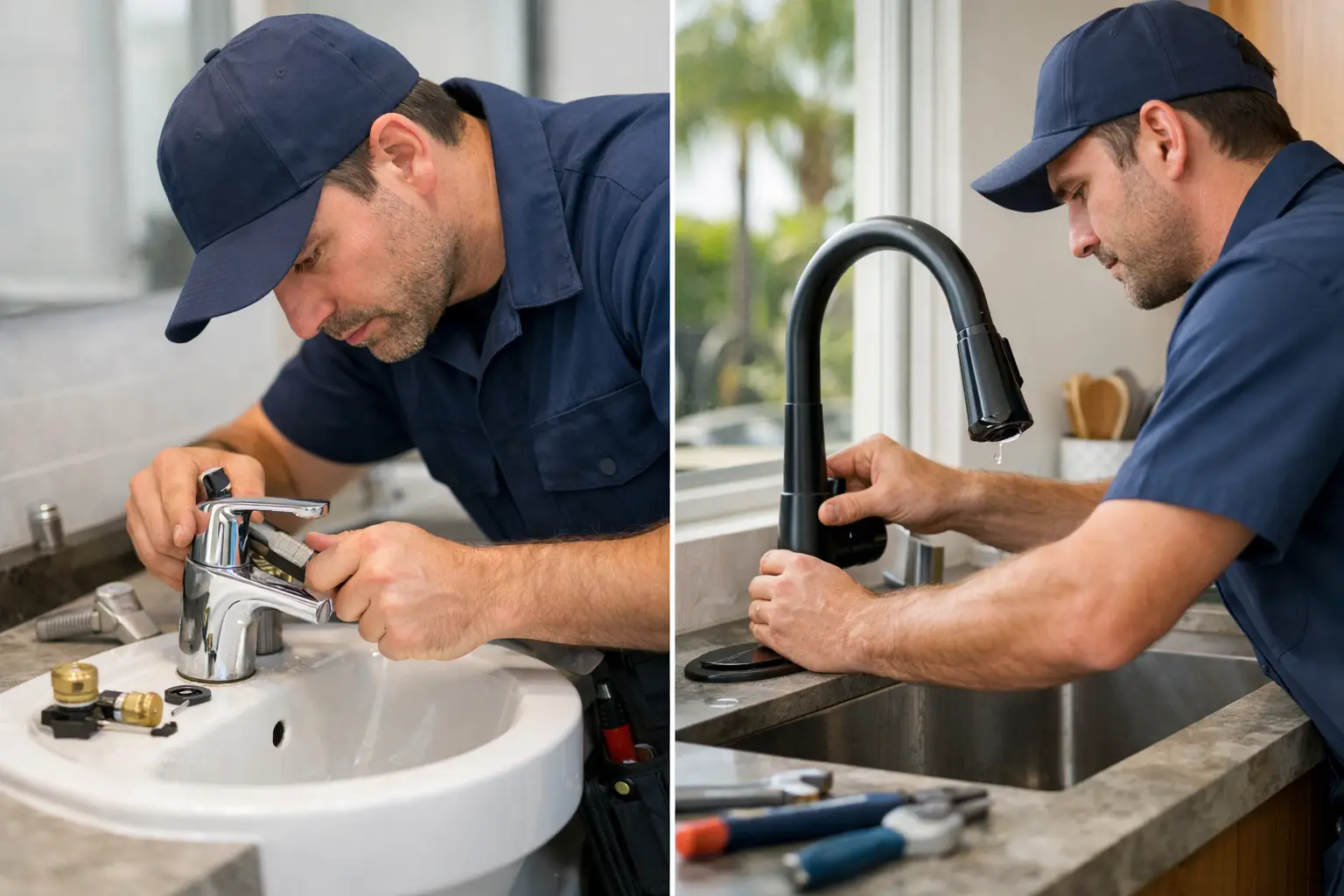


A faucet that drips all night, leaves water under the sink, or barely holds its temperature can turn a small annoyance into a daily frustration. Faucet repair versus replacement is not always an obvious choice, especially when the fixture still looks good but no longer works the way it should. The right answer depends on what has failed, the faucet’s age, the condition of the finish, and whether a repair will truly hold up.
For many Los Angeles homeowners and property managers, the goal is simple: stop the problem without paying for work that does not make sense. A skilled inspection can usually tell you whether a practical repair is enough or whether replacing the fixture will save time, water, and repeat service calls.
When Faucet Repair Is Usually the Better Choice
A repair is often the smart move when the faucet is structurally sound and the issue is limited to a replaceable part. Most common problems come from normal wear inside the fixture, not from the entire faucet failing.
A steady drip, for example, may be caused by a worn cartridge, washer, O-ring, seal, or valve seat. A single-handle faucet that is hard to turn or struggles to mix hot and cold water may need a new cartridge. A loose handle, leaking base, or weak stream can also often be fixed without removing the entire fixture.
Repair makes especially good sense when the faucet is a quality model, matches other fixtures in the room, and has replacement parts that are still available. It is usually less disruptive than a full replacement, too. There is no need to select a new style, confirm the hole configuration, or risk finding a mismatch with the existing sink or countertop.
Signs a Repair Can Be Worth It
A faucet is a good repair candidate when it has a clean, undamaged finish; no cracks in the body; and no major corrosion around the connections. If the leak is coming from the handle or spout rather than from damaged supply lines or the sink itself, an internal part may be all that is needed.
Repair is also a sensible choice for rental properties when the fixture is functional, presentable, and consistent with the rest of the unit. Replacing a cartridge or aerator can restore proper use quickly and help avoid unnecessary turnover costs.
That said, a low repair price is only a good value if the rest of the faucet has life left in it. Replacing one part today does not help much if a corroded handle, failing sprayer hose, or worn mounting hardware is likely to create the next problem soon.
Faucet Repair Versus Replacement: The Key Decision Points
The best choice is less about whether a faucet can be repaired and more about whether it should be. Nearly every faucet has a part that can be replaced, but some repairs are temporary solutions for a fixture that is already near the end of its useful life.
Age and Availability of Parts
Older faucets can be difficult to repair if their cartridges or specialized components are discontinued. This is common with older designer fixtures and inexpensive models that were never built for long-term service. A handyman may be able to identify the needed part, but locating it can take longer and cost more than expected.
If the fixture is more than 10 to 15 years old and has needed multiple repairs, replacement is often more practical. New faucets are generally more water-efficient, easier to maintain, and supported by readily available parts.
Corrosion, Mineral Buildup, and Finish Damage
Hard water minerals can restrict flow and damage internal components over time. In some cases, cleaning or replacing the aerator solves the problem. In others, corrosion has seized fittings, weakened the valve body, or caused staining that cannot be removed.
The faucet finish matters, too. If a polished chrome, matte black, brass, or brushed nickel faucet is badly scratched, peeling, pitted, or discolored, repairing the internal leak may leave you with a fixture that still looks worn out. Replacement may be the better investment when appearance is part of the problem.
Recurring Leaks and Water Damage
One repaired leak is normal. Several leaks in a short period are a warning sign. Water under the sink can damage cabinet bottoms, create odors, warp laminate, and encourage mold growth. A faucet that leaks from multiple locations, especially around the base or supply connections, needs a closer look.
Sometimes the faucet is not the only issue. Shutoff valves, supply lines, drain connections, or a damaged sink mounting surface may also need attention. Addressing the full cause matters more than simply stopping the visible drip.
Cost Compared With Long-Term Value
A repair generally costs less upfront, particularly when it involves a common cartridge, washer, aerator, or adjustment. Replacement has a higher initial cost because it includes the new fixture and installation labor. But the lower-cost option is not always the lower-cost decision over time.
If a repair is approaching a significant share of the installed cost of a new, reliable faucet, replacement deserves serious consideration. This is particularly true when you want upgraded features, such as a pull-down kitchen sprayer, touchless operation, better water flow control, or a finish that fits a remodel.
Clear pricing helps here. Before approving work, ask what is included, whether the repair part is readily available, and whether related components show signs of wear. A straightforward explanation makes it easier to choose based on value rather than urgency.
When Replacement Makes More Sense
Replacement is usually the better answer when the faucet body is cracked, badly corroded, unstable, or leaking from areas that cannot be reliably repaired. It is also a smart choice when the fixture has already had several service calls, parts are obsolete, or its style no longer suits the kitchen or bathroom.
A new faucet can improve more than appearance. Modern models may provide smoother handle movement, easier cleaning, better spray functions, and improved water efficiency. For a homeowner preparing to sell, a clean, updated faucet can also make a kitchen or bathroom feel more maintained without taking on a major renovation.
For property managers, replacement can reduce repeat maintenance requests when an older fixture has become a recurring issue. Choosing a dependable, straightforward model with common replacement parts can make future maintenance easier across multiple units.
Check Compatibility Before Buying
Not every new faucet fits every sink. Before purchasing one, confirm the number of mounting holes, the spacing between holes, the faucet height, and clearance under cabinets or around a backsplash. Kitchen faucets also need enough reach to direct water into the sink bowl, while bathroom faucets must match the sink’s hole layout and drain setup.
It is also worth checking what is included in the box. Some faucets come with supply lines, deck plates, and drain assemblies, while others do not. The least expensive fixture may require extra parts or may not be built for the daily use your household needs.
A Practical Way to Make the Call
Start by looking at the source of the problem. A drip from the spout, a loose handle, or reduced water flow often points to a repairable issue. Water under the sink, heavy corrosion, a wobbling faucet body, or repeated failures suggest replacement may be wiser.
Next, consider how long you plan to keep the fixture and what you want from the space. If you are happy with the faucet’s look and function, a targeted repair is often the fastest path back to normal. If you are already planning a kitchen refresh, updating a rental, or tired of dealing with the same fixture, replacement can be a better use of your money.
For faucets that are difficult to identify, seized in place, or leaking near the shutoff valves, professional help can prevent a small repair from turning into cabinet or plumbing damage. SparkCore Handyman Services can inspect the issue, explain the practical options, and provide clear pricing before work begins.
A faucet does not need to be replaced just because it leaks, and it should not be repaired just because the part is inexpensive. The best choice is the one that gives you reliable daily use, protects the area under your sink, and avoids paying twice for the same problem.