
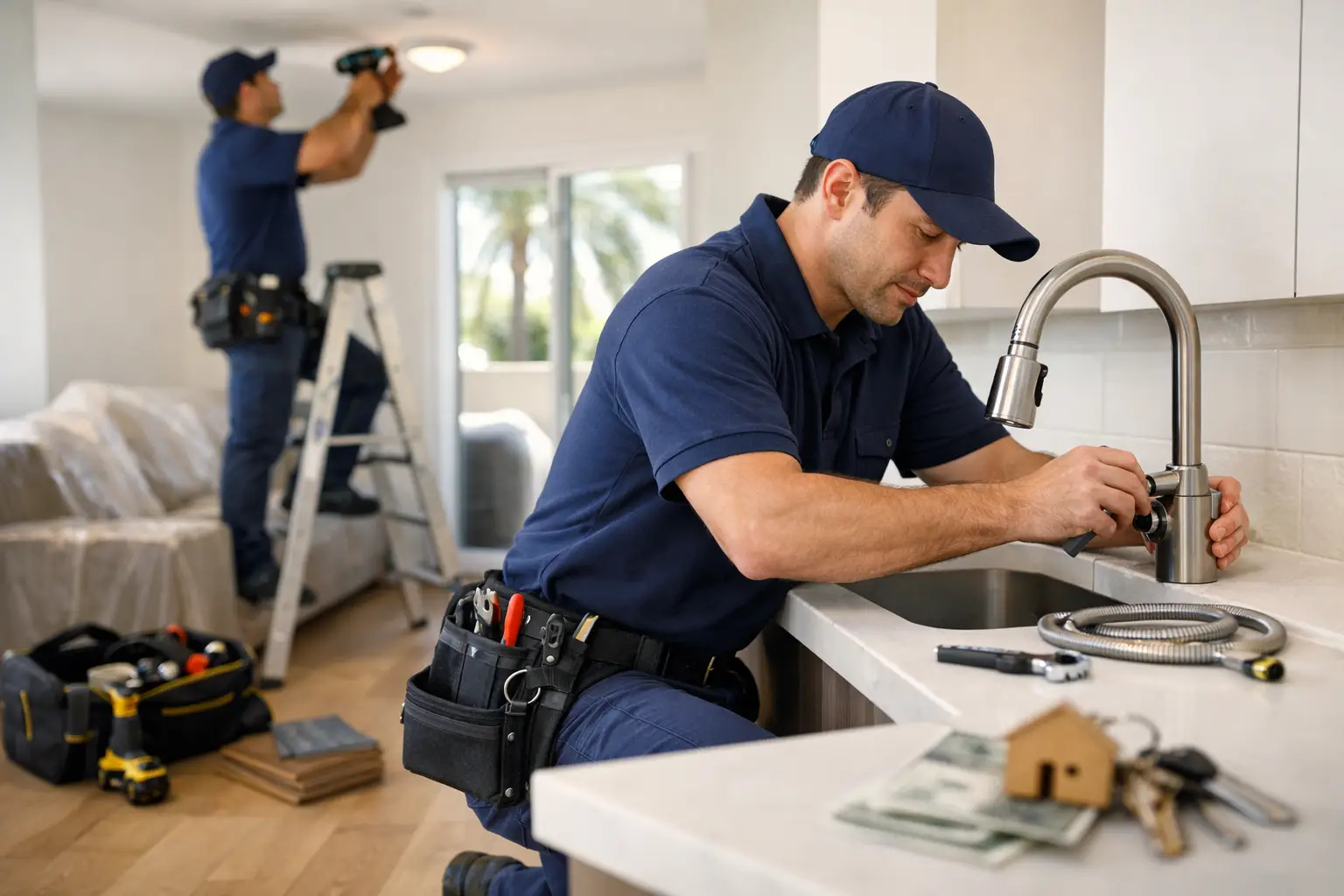


A dripping faucet, sticking closet door, and weak bathroom fan may look like small issues on a walkthrough. To a prospective tenant, they can make the whole home feel poorly maintained. The best rental property repair upgrades focus on the everyday details tenants touch, see, and rely on. Done well, they reduce maintenance calls, protect the property, and help your rental show better without turning a turnover into a full renovation.
For Los Angeles landlords and property managers, the right choice is rarely the most expensive upgrade. It is the one that solves a repeat problem, holds up to regular use, and can be repaired or replaced without creating a bigger job later.
1. Replace Worn Caulk and Grout Before Water Wins
Bathrooms and kitchens are hard-working spaces, and water is usually where small neglected repairs become expensive damage. Cracked tub caulk, missing grout, and loose sink seals allow moisture behind walls, under flooring, and into vanity cabinets. That can lead to swelling, staining, mold concerns, and a much larger repair between tenants.
Fresh, clean caulk around tubs, showers, backsplashes, and sinks is one of the best low-cost upgrades for a rental. Regrouting a shower where joints are failing can also make an older bathroom look noticeably cleaner without replacing tile.
This is not just cosmetic work. The goal is a properly prepared surface and a durable seal. Caulk applied over mildew, loose material, or damp surfaces will fail early. If tiles are loose or there is evidence of water damage behind them, address that first rather than covering up the problem.
2. Upgrade Leaky Faucets and Aging Shutoff Valves
A faucet that drips once every few seconds wastes water and sends the wrong message at a showing. More importantly, an aging faucet or failed supply line can create an urgent call and water damage when a tenant is least prepared to deal with it.
Replace fixtures that have recurring leaks, corrosion, poor water flow, or hard-to-find parts. In many rentals, a straightforward mid-grade faucet is a better investment than a trendy high-end model. Choose finishes and styles that are easy to clean and easy to match if a single fixture needs replacement later.
Shutoff valves under sinks and behind toilets deserve attention too. If a valve is seized, corroded, or leaking, it is not reliable when someone needs to stop water quickly. During a turnover, testing and replacing problem valves is far easier than handling a water emergency after move-in.
3. Install Durable Flooring Where It Matters Most
Flooring has a major effect on how clean and current a rental feels. It also takes some of the hardest wear from pets, moving furniture, rolling office chairs, wet shoes, and regular cleaning. If carpet is stained, heavily worn, or holding odors after repeated cleanings, replacing it may be more cost-effective than another patch job.
Luxury vinyl plank is a practical choice for many rentals because it is water-resistant, easy to clean, and available in finishes that work with a wide range of paint colors and cabinet styles. It is especially useful in living areas, hallways, kitchens, and bedrooms where you want a consistent look and easier turnover cleaning.
The trade-off is preparation. New flooring installed over an uneven subfloor, moisture problem, or damaged underlayment can fail prematurely. In older buildings, check for squeaks, soft spots, and height changes at doorways before selecting a material. A simpler product installed correctly will outperform a premium product installed over a bad surface.
4. Improve Bathroom Ventilation
A bathroom fan that is loud, weak, or nonfunctional is more than an annoyance. Without enough ventilation, moisture stays in the room longer and encourages peeling paint, mildew, warped trim, and persistent odors. Tenants may open a window when possible, but a reliable exhaust fan gives the room a better defense against daily humidity.
Replacing an old fan with a properly sized, quieter unit can improve tenant comfort and reduce moisture-related upkeep. The key word is properly. A fan needs to vent outside, not into an attic or enclosed space, and electrical or ventilation changes may require a qualified licensed trade professional depending on the work and local requirements.
If the fan is working but the room still has moisture issues, inspect the grille, ducting, and exterior vent cover. Sometimes the repair is cleaning an obstructed path rather than replacing the whole unit.
5. Refresh Walls With Washable, Neutral Paint
Paint is one of the fastest ways to improve a rental, but repainting every room at every turnover is not always necessary. Focus on walls with scuffs, nail holes, stains, poor touch-ups, or colors that limit the unit’s appeal. A consistent neutral palette makes touch-ups easier and helps prospective tenants picture their own furniture in the space.
For high-traffic areas, a quality washable finish is worth the modest extra cost. Entry walls, hallways, kitchens, and areas around light switches tend to show fingerprints and marks first. Flat paint can hide wall imperfections, but it is often harder to clean. Eggshell or satin may be more practical in rooms that get regular use, provided the wall surface is in good shape.
Do not skip prep work. Filling holes, sanding rough patches, correcting peeling areas, and protecting trim are what make a paint job look professional rather than rushed.
6. Repair Doors, Locks, and Hardware
Tenants interact with doors more than almost anything else in a home. A front door that sticks, a bedroom door that will not latch, or a loose cabinet handle creates daily frustration and suggests that other problems may be ignored too.
At turnover, test every interior door, closet door, sliding door, cabinet hinge, drawer glide, lock, and handle. Adjusting a strike plate, tightening hinges, lubricating tracks, or replacing worn hardware are small repairs with an outsized effect on how the property feels.
Entry doors need extra attention for safety and weather protection. Check that the deadbolt operates smoothly, the door closes securely, and weatherstripping is intact. Security requirements can vary by property type and jurisdiction, so confirm that locks and required safety features meet applicable rules before a new tenant moves in.
7. Add Simple Lighting Improvements
Poor lighting makes even a clean unit feel tired. Replacing a flickering fixture, yellowed dome light, or mismatched bulbs can brighten kitchens, bathrooms, hallways, and entries quickly. LED bulbs are a sensible rental upgrade because they last longer, use less energy, and reduce the number of simple bulb-related maintenance requests.
Keep color temperature consistent within a room. Many landlords choose a soft white or neutral white light that feels clean without looking harsh. Avoid decorative fixtures that are difficult to clean or require uncommon bulbs. The best rental fixture is usually attractive, durable, easy to maintain, and readily available if it needs to be replaced.
Also check exterior lighting around entrances, walkways, garages, and parking areas. A working light improves visibility and makes arrivals feel safer, especially after dark.
8. Replace Damaged Window Screens and Blinds
Bent screens, torn mesh, broken blinds, and missing slats are common turnover items that are easy to postpone. They also stand out immediately during a showing. Functional screens help tenants ventilate the home without inviting insects inside, while clean window coverings provide privacy and a finished appearance.
Choose simple, durable blinds in a neutral color rather than fragile options with many small parts. For windows with recurring screen damage, repair the frame and spline as needed instead of replacing only the mesh. A screen that does not fit securely will keep becoming a problem.
9. Prevent Small Exterior Problems From Becoming Big Repairs
Exterior maintenance often protects the most expensive parts of the property. Loose fence boards, failing gate latches, cracked exterior caulk, damaged trim, and clogged drainage paths can worsen quickly with sun, moisture, and everyday use.
Walk the outside of the property after a tenant moves out. Look closely at gates, steps, handrails, hose bibs, window trim, exterior doors, and areas where water collects. In Southern California, intense sun can dry and crack caulk and paint, while occasional heavy rain exposes drainage problems fast.
Prioritize repairs tied to safety, water intrusion, and access first. A loose handrail or unstable step should never wait for a cosmetic refresh. After that, address visible wear that affects curb appeal and tenant confidence.
How to Choose Rental Upgrades in the Right Order
When the repair list is long, start with habitability, safety, active leaks, and anything that could damage the property. Then move to repeat maintenance issues such as faulty hardware, poor ventilation, and worn flooring. Cosmetic improvements come after the essentials, but they still matter when they help the unit rent faster or support a stronger asking price.
Keep a short record of recurring tenant requests. If three tenants have reported the same sticking sliding door, dim hallway light, or leaking toilet, that is a signal to upgrade the underlying issue instead of making the same temporary repair again. This approach makes maintenance spending more predictable and helps avoid frustrating callbacks.
For a turnover repair list that needs prompt, dependable attention, SparkCore Handyman Services can help Los Angeles-area owners tackle practical repairs, painting, hardware fixes, and small improvements with clear communication and reliable scheduling. A well-maintained rental does not need to look extravagant. It needs to feel clean, safe, functional, and ready for the next person to call it home.