
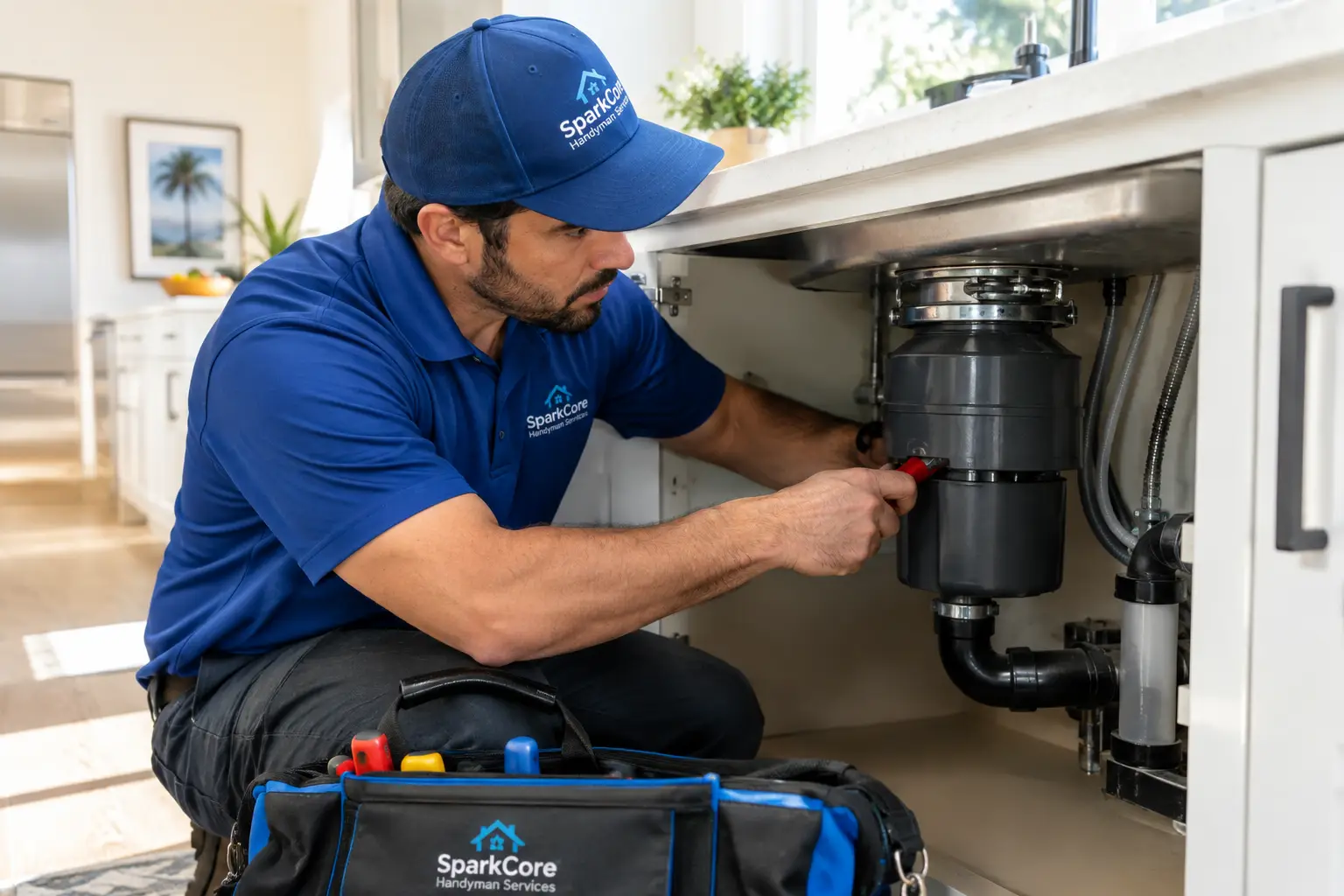


A garbage disposal that hums without grinding is usually telling you to stop and check it before the motor overheats. So, why does garbage disposal hum? In most cases, the unit is getting power but its grinding plate cannot turn. A small hard object, compacted food waste, or a worn internal part may be holding it in place.
The good news is that a humming disposal does not always mean replacement. Many jams can be cleared safely with a few basic steps. The key is not to keep flipping the switch. Repeatedly running a stuck disposal can burn out the motor and turn a simple repair into a new-installation job.
Why Does a Garbage Disposal Hum Instead of Grind?
A disposal has an electric motor that spins an internal plate, sometimes called a flywheel. When you turn it on, the motor should create enough force to rotate that plate and break down food scraps. If the plate is blocked, the motor may still receive electricity and make a low humming sound, but it cannot spin.
That humming is different from normal grinding noise. A working disposal sounds active and changes tone as water and food move through it. A steady hum with no movement, especially one that stops after a few seconds, points to a jam or seized mechanism.
The built-in overload protector may trip if the motor gets too hot. This safety feature helps prevent damage, but it does not fix the reason the disposal got stuck in the first place.
Common Reasons Your Disposal Is Humming
The most common cause is a hard item caught inside the grinding chamber. Fruit pits, bones, small pieces of glass, metal utensils, bottle caps, twist ties, and even a dropped screw can stop the plate. Grease buildup and dense food waste can also cause trouble, particularly when rice, pasta, potato peels, coffee grounds, or fibrous vegetables are sent down in large amounts.
Sometimes the issue is not a visible object. Older disposals can seize from corrosion, worn bearings, or internal motor failure. This is more likely if the unit has been noisy for weeks, leaks from its body, trips the reset button often, or has reached the end of its typical service life.
A clogged drain line can make a disposal drain slowly, but it usually does not cause the motor to hum by itself. If the disposal runs normally and water backs up into the sink, the problem may be farther down the drain or in the dishwasher connection. That difference matters because forcing the disposal to run will not clear a grease-heavy drain blockage.
What to Do When a Garbage Disposal Hums
Start by turning the wall switch off. Then unplug the disposal from the outlet under the sink if you can reach it. If it is hardwired, turn off the correct circuit breaker. Do not rely on the wall switch alone while you inspect the unit.
Never put your hand inside the disposal, even when the power is off. Use a flashlight to look through the sink opening. If you see an object, use long kitchen tongs or needle-nose pliers to remove it. Keep your fingers outside the chamber.
If nothing is visible, look underneath the disposal for a small hex-shaped opening in the center of the base. Many models include a disposal wrench for this opening, although a 1/4-inch Allen wrench often fits. Insert the wrench and move it back and forth until the internal plate loosens. You may feel resistance at first, then a noticeable release when the jam clears.
Some disposals do not have a bottom hex opening. For those models, a wooden broom handle can be placed through the sink opening to gently move the internal plate. Do this only with all power disconnected. Do not use a metal tool from above, since it can damage the disposal and create an electrical hazard if power is restored by mistake.
Once the plate moves freely, remove any loose debris with tongs. Then press the reset button, usually a red button on the underside of the disposal. Wait about 10 minutes first if the unit is hot. Restore power, run cold water, and test the disposal briefly.
If it starts and sounds normal, let cold water run for another 20 to 30 seconds. That helps move loosened food particles through the drain. Avoid filling the sink and testing it with a large load of scraps right away.
When the Reset Button Keeps Popping
A reset button that pops once after a jam can be normal. A reset button that continues to trip is a warning sign. The motor may be overheating because the grinding plate is still restricted, the unit may have an electrical problem, or internal components may be worn out.
Do not keep resetting the disposal and trying again. Each attempt puts stress on a motor that may already be struggling. If the disposal hums after you have cleared visible debris and rotated the plate manually, leave it off and arrange a professional inspection.
You should also stop troubleshooting if you notice a burning smell, smoke, water dripping from the bottom of the disposal, a damaged power cord, or a breaker that trips repeatedly. Those signs can point to motor failure or an electrical issue that needs a qualified repair professional.
A Humming Disposal May Need Replacement
A jammed disposal is often repairable. But replacement can be the smarter choice when the motor has failed or the unit is leaking from its housing. A disposal that leaks from the sink flange, dishwasher connection, or drain pipe may need a seal, fitting, or plumbing repair instead. A leak from the bottom of the unit itself usually means the internal seals have failed.
Age also plays a role. Basic garbage disposals often last around eight to 12 years, depending on use, maintenance, and water conditions. If an older unit has started humming, leaking, and tripping the reset button, paying for repeated repairs may not make financial sense.
A proper replacement involves more than swapping the appliance. The sink mounting assembly, drain connection, dishwasher hose, electrical connection, and discharge pipe all need to fit correctly. In older Los Angeles homes and condos, under-sink space and existing plumbing layouts can make the job less straightforward than it appears.
For homeowners who want the problem handled without guesswork, SparkCore Handyman Services can inspect a jammed or failing disposal, identify whether repair is reasonable, and help with a clean replacement when needed.
How to Prevent Another Disposal Jam
Use plenty of cold water whenever the disposal is running. Cold water keeps grease firmer so it can move through the system instead of coating the drain. Continue running water briefly after the grinding sound stops.
Treat the disposal as a tool for small food residue, not as a replacement for the trash can. Scrape plates into the garbage first, then use the disposal for what remains. Keep grease, oil, large bones, fruit pits, shells, coffee grounds, pasta, rice, fibrous celery, onion skins, and potato peels out of the unit.
Cleaning does not need harsh chemicals. A few ice cubes can help dislodge light residue, and a little dish soap with cold water can freshen the chamber. Avoid chemical drain cleaners in a disposal. They can damage seals and pipes, and they make future hands-on repairs more hazardous.
A humming disposal deserves attention, but it does not have to ruin your day. Turn off the power, check for a simple jam, and do not force a motor that will not turn. When the cause is unclear, a timely repair can protect both the disposal and the plumbing beneath your sink.