
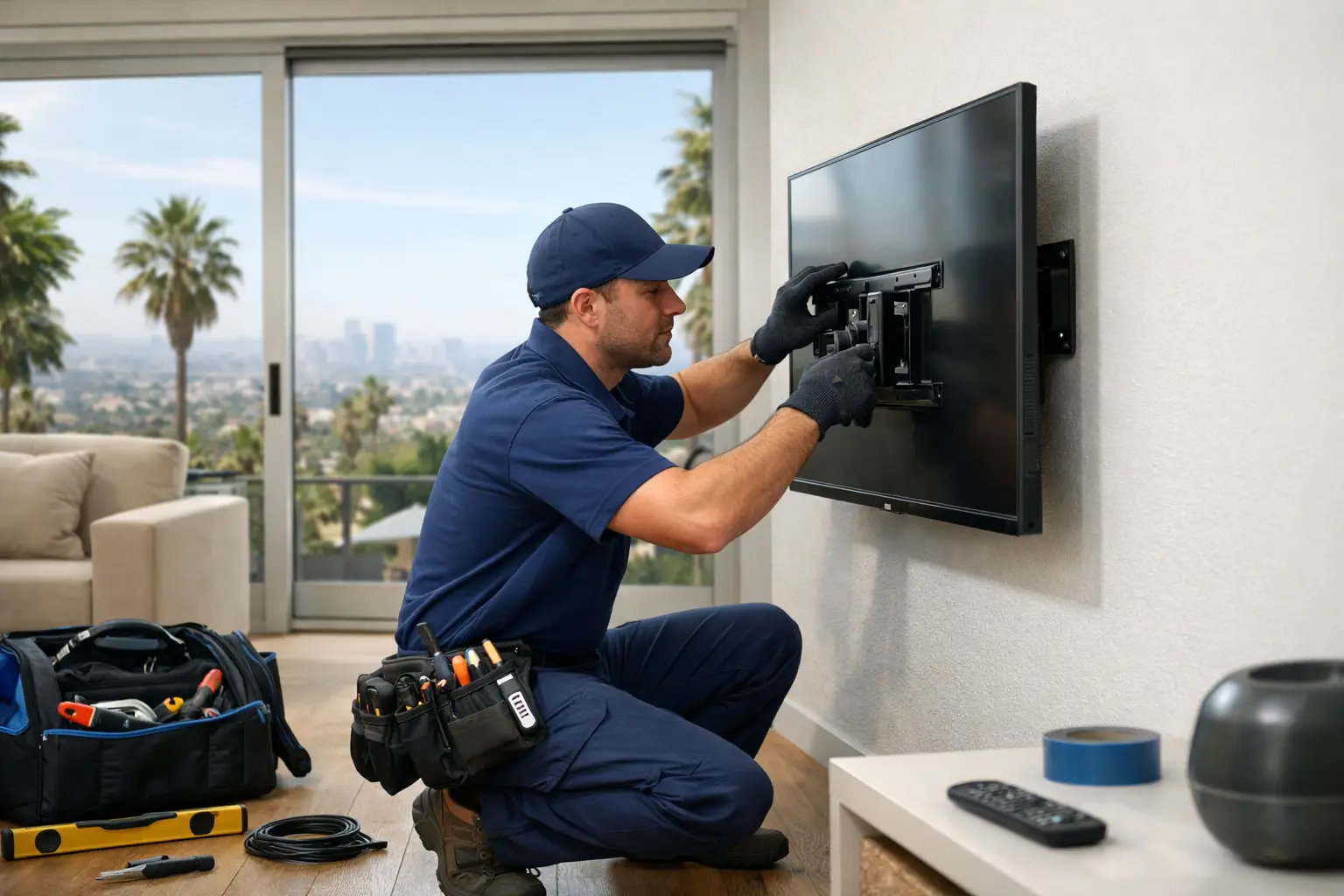


A new TV can look great in the box and still become a frustrating project once it is time to mount it. The wall material is unclear, the studs are not where you expected, the mount instructions are vague, and a screen that sits even slightly crooked is hard to ignore. A professional Los Angeles TV mounting service helps homeowners get a secure, level result without turning a simple upgrade into an all-day repair job.
For busy homeowners, landlords, Realtors, and property managers, TV mounting is not just about making a room look cleaner. It is about protecting an expensive screen, keeping the viewing area safe, and having the work completed on schedule. The right installer plans the placement before drilling, uses hardware suited to the wall, and makes sure the TV is stable before the job is finished.
What a Proper TV Mounting Job Includes
A solid installation starts before the mount touches the wall. The first question is where the TV should go. That includes viewing height, seating distance, glare from windows, nearby outlets, furniture placement, and whether the screen needs to swivel toward different parts of the room.
The mount itself matters just as much. Fixed mounts keep the TV close to the wall and work well when the viewing position is straightforward. Tilting mounts are useful when a TV sits higher than eye level, such as over a fireplace or in a bedroom. Full-motion mounts allow the screen to extend and turn, but they place more leverage on the wall and need especially secure fastening.
A professional installation should also include finding the proper structural support, drilling cleanly, mounting the bracket level, attaching the TV safely, and testing the movement and stability. If requested, cable routing and basic device connection can be part of the plan as well. The exact scope should be clear before work begins so there are no surprises at the end.
Why Wall Type Changes the Installation
Los Angeles homes include a wide mix of wall conditions. A newer condo may have metal studs. A single-family home may have standard wood framing behind drywall. Older properties can bring plaster walls, unusual framing, patchwork repairs, or masonry surfaces. The same mount and hardware should not be used for every wall.
Wood studs are typically the most direct mounting location because they provide reliable support for the weight of the TV and mount. A stud finder is helpful, but an experienced installer also confirms the stud location and checks for possible obstacles before drilling.
Metal studs require a more careful approach. Depending on the TV size, mount style, stud gauge, and spacing, the installer may need specialized anchors, a mounting plate, or another solution that spreads the load correctly. Simply putting a large TV on ordinary drywall anchors is not a safe shortcut.
Concrete, brick, and block walls can support a TV well, but they require the proper masonry bits, anchors, and drilling method. Plaster walls need care because they can crack or chip if handled roughly. This is why a quick photo of the wall and TV before scheduling can help set the right expectations for the job.
Choose the Location Before You Choose the Height
Many TV mounting problems come from choosing a spot based only on an empty wall. A television should work for the way the room is used. In a living room, the center of the screen is often close to seated eye level. That is generally more comfortable than mounting it high just to fill wall space.
Fireplace installations are popular, especially in homes where the fireplace is the visual center of the room. They can work, but there are trade-offs. The screen may sit too high for comfortable everyday viewing, and heat can be a concern depending on the fireplace type and how often it is used. A tilting mount may improve the viewing angle, but it does not solve every height issue.
Before installation, sit where you normally watch TV and look at the wall. Think about sunlight in the afternoon, lamp glare at night, door swing, and whether a soundbar or media console needs room below the screen. Five minutes of planning can prevent a new set of holes later.
Account for the TV and the Mount Together
The TV size alone does not determine whether a mount will work. The TV’s weight, VESA mounting pattern, rear panel shape, and cable port placement all affect compatibility. A mount rated for a particular screen size may still be a poor choice if it does not support the TV’s weight or mounting pattern.
Full-motion mounts deserve extra attention. They are convenient for corner installations, open-concept rooms, and spaces where people watch from more than one area. But because the TV pulls away from the wall, the installation needs strong support and proper hardware. A lower-profile fixed mount may be the better choice when movement is not necessary.
Cable Planning Makes the Finished Job Look Better
A securely mounted TV can still look unfinished if power cords and HDMI cables hang in plain view. Cable management is worth discussing before installation, particularly if you are mounting a TV above a console, in a bedroom, or in a rental where wall modifications need to stay minimal.
The simplest option is often a surface-mounted cable cover painted to match the wall. It keeps cords organized and is practical for many homes. For a cleaner built-in appearance, some homeowners prefer in-wall cable routing. That option depends on wall access, local requirements, and the electrical setup.
A standard power cord should not simply be run loose inside a wall. If a new recessed outlet or in-wall power solution is needed, that electrical work may require a qualified licensed electrician. Clear advice is better than taking shortcuts around power. HDMI, coaxial, Ethernet, and low-voltage cables have different considerations, so the cable plan should match the equipment you actually use.
When TV Mounting Is Especially Worth Hiring Out
A smaller TV on an open wood-stud wall may be manageable for a confident DIY homeowner with the right tools. Even then, the work usually takes longer than expected, especially when the TV is heavy, the bracket is awkward, or a second pair of hands is needed.
Professional help is especially useful for larger screens, full-motion mounts, masonry or plaster walls, corner installations, above-fireplace locations, and properties where appearance matters. It also makes sense when you are preparing a home for sale, setting up a rental between tenants, or furnishing a new place on a short timeline.
Property managers often benefit from having one dependable person handle the practical details: mounting the TV, touching up minor wall marks, hanging shelves, securing curtain rods, or addressing small move-in repairs. Keeping related tasks together can save time and reduce the number of appointments to coordinate.
What to Ask Before Booking a Los Angeles TV Mounting Service
You do not need to become a mounting expert before calling for help. A few straightforward details make it easier to get an accurate estimate and arrive prepared. Share the TV size and model if available, the type of wall, the mount you already have or want to use, and photos of the intended location.
It also helps to mention anything unusual upfront. Let the installer know if the wall is above a fireplace, if there is a soundbar to mount, if you want cords concealed, or if the TV needs to be installed in a high-traffic room. For apartments and condos, check building rules or landlord requirements before approving drilling or electrical changes.
Ask whether pricing is clear, whether the work is insured, what is included in the appointment, and whether workmanship is backed by a warranty. The lowest quote is not always the best value if it leaves out hardware, cable management, setup, or the extra time required for a difficult wall.
A Safer, Cleaner Result Without the Guesswork
A TV should feel secure the moment it goes on the wall. There should be no rocking bracket, visible tilt, loose cables, or uncertainty about whether the anchors will hold. The finished setup should fit the room, not just the measurements on the box.
SparkCore Handyman Services approaches TV mounting like the practical home project it is: inspect the wall, discuss the placement, explain the options, and complete the work with care. Clear pricing and dependable scheduling matter because your time matters too.
If you are planning a TV installation, take a few photos of the space, note the screen size, and think through how you want the room to function. That small bit of preparation makes it much easier to turn an empty wall into a viewing setup you will be happy to live with.