
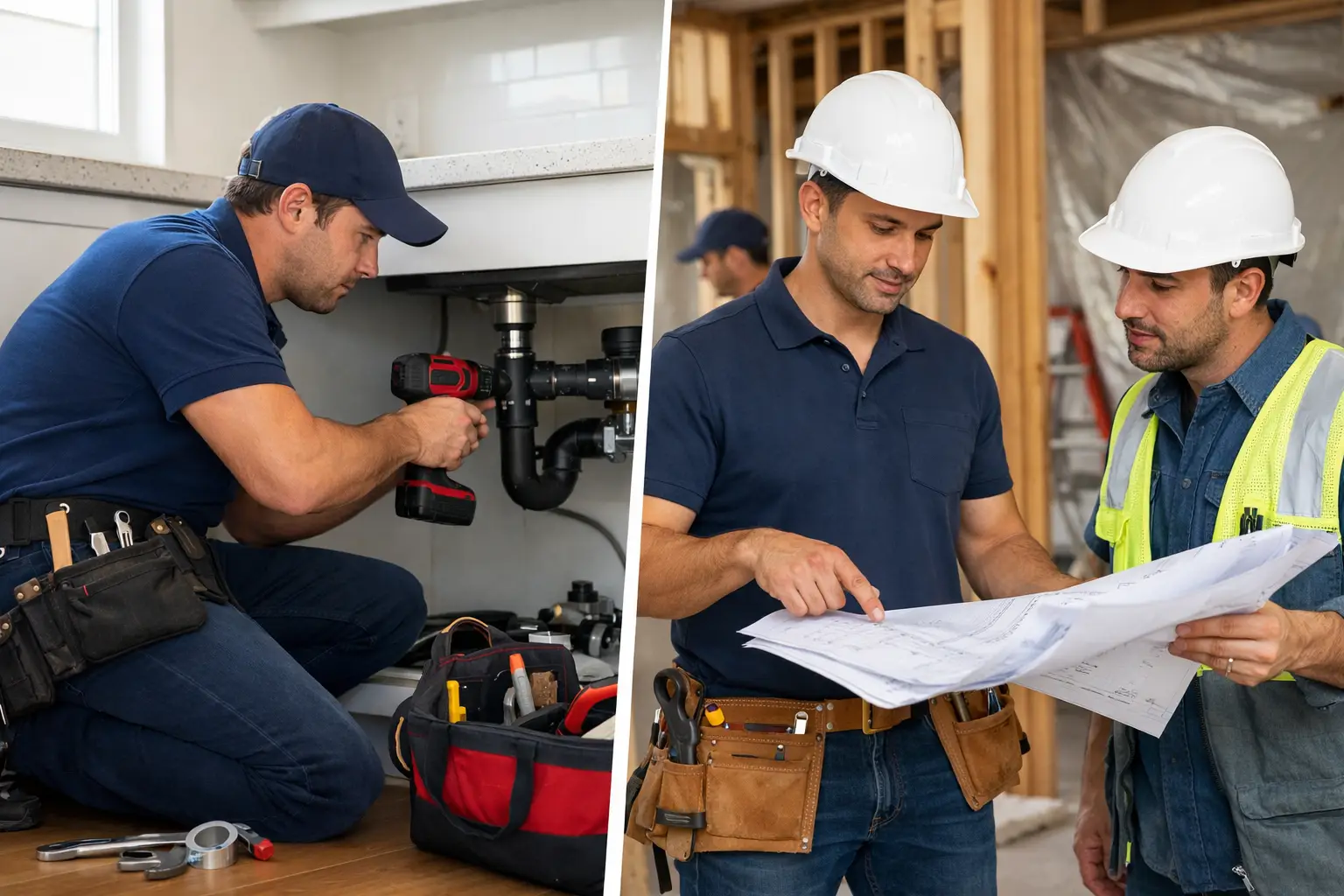


A loose cabinet door, a dripping faucet, damaged drywall, and a room that needs fresh paint can make a home feel like one long to-do list. But when it is time to hire help, the handyman versus general contractor question matters. Choosing the right professional can save time, prevent unnecessary costs, and help you avoid bringing the wrong team into a project.
For most everyday repairs and smaller upgrades, a skilled handyman is the practical choice. For major construction, structural changes, or work involving several specialized trades and permits, a general contractor is usually the better fit. The difference is not about who is better. It is about matching the scope of work to the person responsible for it.
Handyman Versus General Contractor: The Main Difference
A handyman focuses on repairs, maintenance, and smaller improvement projects. The work is usually straightforward, contained, and can often be completed in one visit or over a few days. Think of the jobs that keep a property working properly: fixing doors and hardware, patching drywall, painting, replacing fixtures, assembling furniture, hanging shelves, repairing trim, or tackling a list of small issues at once.
A general contractor manages larger construction or renovation work. They may coordinate demolition, framing, plumbing, electrical work, inspections, materials, permits, and subcontractors. Their role is less about completing a quick repair and more about overseeing a project with multiple moving parts.
The easiest way to think about it is this: a handyman solves practical problems around the house. A general contractor manages construction.
That distinction is especially helpful in Los Angeles, where condo rules, older homes, permit requirements, parking logistics, and building access can all affect the job. A small repair does not need a full construction company. A bathroom remodel that changes plumbing and layout should not be treated like a simple repair visit.
When a Handyman Is the Right Call
Hire a handyman when the work is small to medium in scope, does not involve major structural changes, and can be completed without coordinating several licensed trades. A handyman is often the most efficient option when you have several unrelated tasks waiting at the same property.
For example, a homeowner may need a bedroom painted, a leaking toilet repaired, two ceiling fans replaced, curtain rods installed, and a damaged baseboard fixed. Calling separate specialists for each item can mean multiple appointments, service fees, and days spent waiting at home. A dependable handyman can often handle much of that list in an organized visit.
Handyman service is also a strong fit for rental turnovers and pre-listing updates. Property managers and Realtors frequently need punch-list work completed quickly: wall patching, touch-up paint, caulking, hardware replacement, blinds, doors, and minor repairs that make a unit cleaner, safer, and ready for the next step.
Speed is another advantage. With a smaller project, the goal is usually simple: assess the problem, explain the repair, provide clear pricing, and get it done. That is why same-day or prompt handyman service can be so useful for urgent but manageable issues.
Common handyman projects
A handyman is often the right choice for repairs and improvements such as drywall patches, interior painting, door adjustments, fence repairs, fixture replacement, shelving, TV mounting, cabinet hardware, weatherstripping, caulking, minor carpentry, and general home maintenance.
The exact job still matters. Even work that sounds small can require a specialist if it involves gas lines, a major electrical upgrade, hidden water damage, or a safety issue. A good handyman will be direct about those limits rather than taking on work that should be handled by a licensed trade professional.
When You Need a General Contractor
A general contractor is the better choice when the project changes the structure, layout, or major systems of the home. You will likely need one for a substantial kitchen renovation, room addition, garage conversion, major bathroom remodel, load-bearing wall work, or a project that requires permits and inspections.
Their value is coordination. A larger renovation may involve an architect or designer, city requirements, plumbing, electrical, HVAC, tile, cabinetry, flooring, and multiple inspections. Someone needs to manage schedules, materials, subcontractors, quality control, and the order of work. That is the general contractor’s job.
A general contractor may also be necessary when a project must comply with specific building-code requirements. California licensing and permit rules can apply based on the type, value, and scope of work. Requirements can also vary by city and property type, so do not assume a project is permit-free because it looks simple at first glance.
This route usually costs more and takes longer than hiring a handyman. That is not automatically a downside. For a complex project, planning and supervision are part of protecting your home, budget, and timeline.
Cost, Timing, and Scope: How to Decide
Many homeowners start by comparing hourly rates, but the better question is which option prevents wasted money. Hiring a general contractor to replace a few doors, patch walls, and repaint a room may add unnecessary overhead. Hiring a handyman for a renovation that requires permits, design decisions, and multiple subcontractors can create expensive problems later.
A handyman often has a simpler pricing structure for smaller jobs. Pricing may be hourly, by task, or based on a written estimate after reviewing the work. The timeline is usually short because there are fewer dependencies. Materials can be basic and readily available, and one person can complete the work from start to finish.
A general contractor’s estimate generally reflects more than labor. It may include project management, subcontractors, permit coordination, material ordering, disposal, scheduling, and contingency planning. That can make the initial number higher, but it also reflects the responsibility of managing a larger job correctly.
Before you request an estimate, define what you want done. Photos, measurements, a short list of priorities, and any building or HOA rules help a service professional give you a more accurate answer. If you are unsure whether the work is too large for a handyman, explain the full plan rather than describing only the first task.
Questions to Ask Before You Hire
You do not need construction experience to hire confidently. You do need clear communication. Ask whether the provider has handled similar work, what is included in the estimate, whether materials are included, how long the job should take, and what happens if the scope changes after work begins.
For handyman work, ask about insurance, scheduling, workmanship warranty, and whether the person completing the work will be the person you communicated with. Those details matter when someone is working inside your home or rental property.
For contractor work, ask who will manage the project, whether permits are needed, which subcontractors will be involved, how payments are structured, and how changes are approved. Get the scope in writing. A clear written plan prevents misunderstandings about finishes, materials, timelines, and responsibilities.
Be cautious with anyone who gives a vague price without seeing enough details, pressures you to decide immediately, or cannot explain the limits of the work. Reliable professionals do not promise what they cannot safely or legally deliver.
A Practical Choice for Smaller Home Projects
If your project is a repair, a maintenance list, or a focused improvement that needs skilled attention without a construction crew, start with a handyman. SparkCore Handyman Services helps homeowners and property managers handle the practical work that is easy to postpone but hard to ignore, with clear communication, dependable scheduling, insured service, and workmanship backed by a warranty.
If the project grows into a remodel, involves permits, or requires multiple trades, that is the point to bring in a qualified general contractor. Starting with the right fit keeps the work moving and helps you spend your budget where it actually adds value.
The best hire is the one who can take responsibility for the job in front of you, explain the plan plainly, and leave your home in better shape than they found it.