
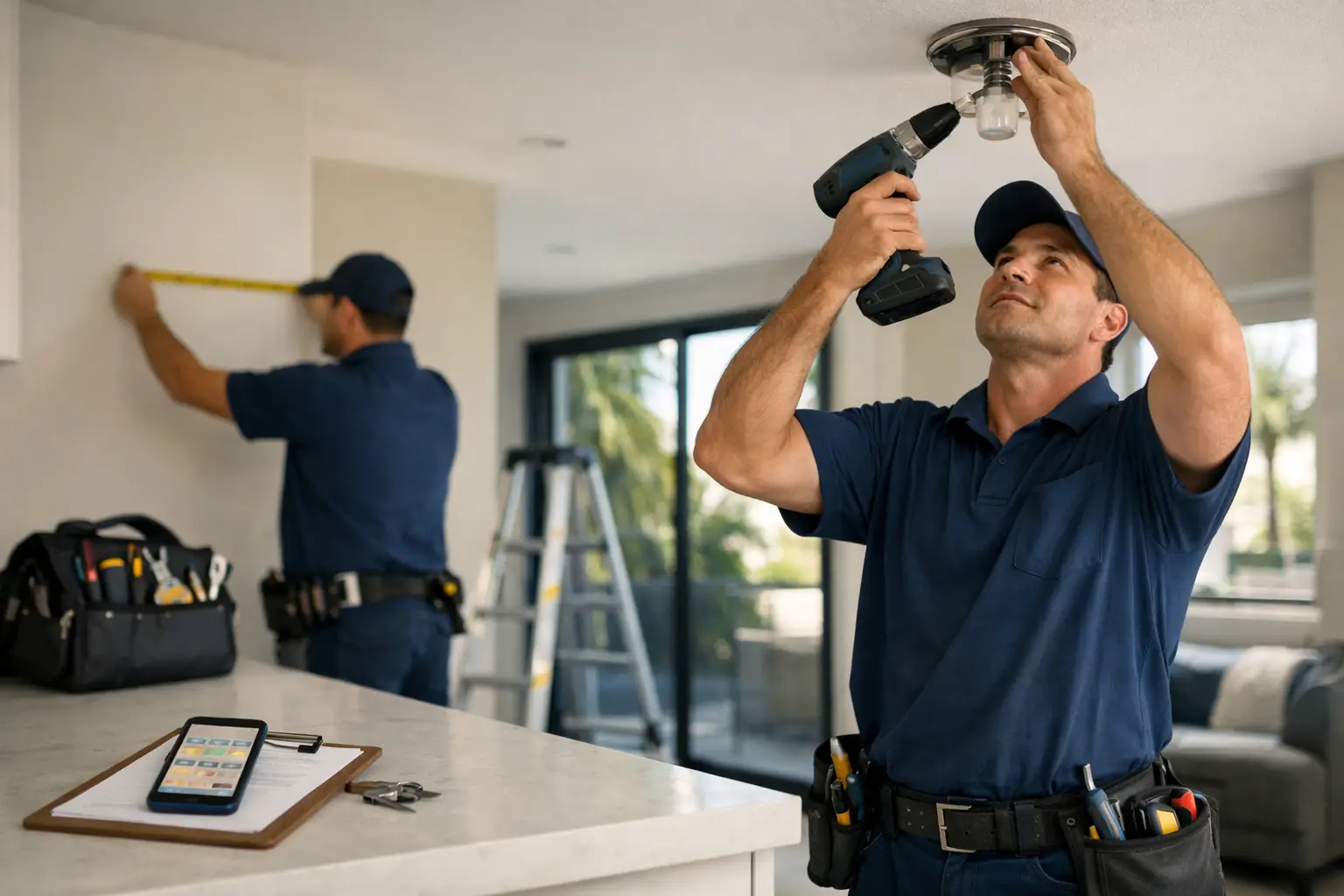


You block off a morning for a repair, move meetings around, and make sure someone is home – then the handyman shows up late, reschedules last minute, or stops replying altogether. For most homeowners, reliable handyman scheduling is not a small detail. It is the difference between getting a repair handled quickly and losing half a day to uncertainty.
That matters even more when the job is tied to daily life. A sticking door, damaged drywall, loose cabinet, broken fixture, or touch-up painting project might not be a full renovation, but it still affects how your home functions. When scheduling is vague, the repair itself starts feeling harder than it should.
Why reliable handyman scheduling matters so much
Most people do not hire a handyman because they want a long planning process. They hire one because something needs attention now, or because a list of small problems has finally reached the point where it is wasting time. Good scheduling respects that reality.
A reliable schedule does three things at once. It protects your time, sets clear expectations, and gives you confidence that the person coming into your home is organized. If a handyman cannot manage the calendar well, homeowners naturally wonder how the rest of the job will go.
That does not mean every appointment has to happen with perfect precision down to the minute. Home service work is not like ordering takeout. Traffic, supply runs, and hidden issues behind walls can affect timing. What matters is how those variables are handled. Reliable scheduling is less about pretending nothing ever changes and more about communicating early, clearly, and honestly when it does.
What reliable handyman scheduling looks like in real life
For homeowners, dependable scheduling is usually easy to recognize. You ask for help, get a timely response, and receive a clear appointment window instead of a vague promise. If photos or details are needed before the visit, that is explained upfront. If pricing can be estimated in advance, that is discussed before the work begins. If timing shifts, you are told before you are left waiting.
That sounds basic, but it is where many service providers fall short. Some book jobs too aggressively and end up running behind all day. Others give broad timeframes because they are unsure how long earlier appointments will take. Some simply do not have a real system, so customers are stuck texting for updates.
Reliable handyman scheduling usually includes a few practical habits: confirming the job details before the appointment, setting a realistic arrival window, sending updates if the schedule moves, and avoiding overbooking. None of that is flashy. It is just professional.
The biggest scheduling problems homeowners run into
No-shows are the obvious one, but they are not the only problem. A lot of frustration comes from partial communication. A handyman may intend to come, but if the customer has no confirmation, no arrival window, and no updates, the experience still feels unreliable.
Another common issue is overpromising same-day service. Same-day availability can be extremely helpful, especially for smaller repairs or urgent maintenance, but it has to be handled honestly. If every incoming request is treated like an immediate booking without checking workload, the schedule becomes unstable fast.
Then there is unclear job scoping. Sometimes a customer says, “I need a few small things done,” and the list turns out to be eight separate tasks with different materials and timelines. That mismatch affects scheduling more than people realize. A reliable handyman will usually ask a few extra questions before confirming the visit because accurate scheduling starts with understanding the actual work.
How professionals build reliable handyman scheduling
The strongest scheduling systems are simple, not complicated. First, the handyman gathers enough information to understand the job. That might mean a quick call, a text description, or a few photos. This helps estimate how much time is needed and whether any materials should be picked up in advance.
Next comes honest availability. A dependable provider does not just say yes to everything. They look at the day, the drive time, the scope of work, and the likelihood that an earlier job could run long. That makes appointment windows more realistic.
Communication is the third piece. Customers do not expect mind reading. They expect updates. If a prior drywall repair takes longer because of hidden damage, a quick message can preserve trust. Without that message, even good workmanship gets overshadowed by frustration.
Finally, there is follow-through. Scheduling only feels reliable when the appointment actually happens as promised, with the right tools, a clear plan, and a professional approach at the door.
Reliable handyman scheduling for busy households
In busy homes, scheduling is often more important than price by itself. Parents coordinate around school pickup. Professionals shift calls or remote work blocks. Landlords try to align access with tenant availability. Realtors may need work completed before a listing goes live or before a final walkthrough.
That is why service windows need to be useful, not theoretical. A four-hour mystery window with no updates can create more stress than the repair itself. In practice, many customers would rather hear, “I can be there this afternoon between 2 and 4,” and then get a confirmation message, than hear a vague promise of “sometime today.”
In areas like Los Angeles, that becomes even more important. Traffic alone can throw off timing if the schedule is built too tightly. Professionals who know the local pace of the day tend to schedule more realistically, which benefits the customer long before the first tool comes out.
What homeowners should ask before booking
If you want better results, a few questions can tell you a lot before the appointment is even set. Ask how scheduling works. Ask whether you will get a confirmation message. Ask what happens if an earlier job runs long. Ask whether the provider can review photos first to better estimate timing.
You can also ask whether materials are included in the plan or if the first visit is for assessment only. That matters because some jobs can be completed in one trip, while others are better handled in stages. Neither approach is automatically wrong. The key is knowing which one you are booking.
The goal is not to interrogate the handyman. It is to make sure expectations match. Good professionals usually welcome these questions because they prevent confusion later.
Why clear pricing supports scheduling too
Pricing and scheduling are closely connected. When pricing is vague, jobs often expand mid-visit, which can throw off the rest of the day. When the work scope and pricing are discussed clearly ahead of time, the appointment is easier to plan and easier to complete.
This is especially true for multi-item visits. If a homeowner wants curtain rods installed, drywall patched, doors adjusted, and paint touched up in one appointment, clear communication about task order, time needed, and material readiness helps keep the schedule dependable.
That is one reason many homeowners prefer working with a structured local service instead of rolling the dice on an unorganized independent operator. Clear pricing, insured work, and a defined process do not just protect the job. They protect the schedule.
The trade-off between speed and certainty
Sometimes homeowners want help fast, and sometimes they want a narrow appointment window. Those goals can work together, but not always perfectly. A same-day opening may be available because the provider has flexibility in the route, while a tightly fixed time may require a later date.
That is where honesty matters. Reliable service does not mean saying yes to every preference. It means being upfront about what is realistic. For some customers, fast service is the priority. For others, certainty matters more because of work, tenants, or access issues. A professional scheduling process accounts for both instead of pretending there is never a trade-off.
For owner-led companies like SparkCore Handyman Services, that direct communication is often a real advantage. When the person managing the schedule is close to the actual work, customers usually get clearer answers and fewer surprises.
When dependable scheduling becomes a sign of overall quality
People often judge handyman work by the finished repair, and that makes sense. But long before the final result, scheduling gives you an early signal about the kind of service you are dealing with. Organized communication, realistic timing, and respect for your availability usually point to a better overall experience.
A handyman does not need a fancy system to be dependable. What matters is consistency. Answer the message. Confirm the appointment. Show up when promised. Update the customer if something changes. Do solid work once you arrive.
That is what homeowners are really asking for when they look for reliable handyman scheduling. Not perfection. Not a big sales pitch. Just a service experience that feels steady, clear, and respectful from the first message to the finished job.
If you are booking help for your home, pay attention to the scheduling process as much as the repair itself. It often tells you exactly how the rest of the job will go.